

Perimeter protection and open-area security: how do you effectively secure large industrial sites?
Effective perimeter protection starts at the property line, not at the building. Anyone who wants to secure large industrial sites needs a concept that combines detection at the perimeter with surveillance of the open area behind it.


.png)






Why a single static technology cannot reliably protect large open areas.
Many sites rely on a single technology, usually the fence. That only covers the property line and leaves three structural gaps that pure perimeter surveillance can hardly close.
A fence alone is easy to overcome
A security fence is an important barrier, but on its own it is quickly climbed or cut. Once fence detection is bypassed, the area behind it remains unprotected. At roughly 30 to 70 euros per meter, the investment in monitored security fencing is also considerable.
Perimeter only, no insider protection
Perimeter protection ends at the boundary. It does not monitor the large open area behind it. Yet a great many break-ins involve insiders who already move around the site legitimately and are never picked up by a fence-only solution.
Airspace unsecured
Fence, motion detectors and camera masts only look at the ground. The airspace above the property stays open, even though unauthorized drones can carry out reconnaissance or cause disruption. Without airspace security the security concept remains incomplete.
Perimeter protection and open-area security in detail.
What is perimeter protection? Perimeter protection means securing the outer property line of a site. The key idea: detection starts at the perimeter, not at the building. Anyone who spots an intruder at the boundary gains valuable time. This intervention time is the window in which response teams and police can react before damage occurs. The earlier detection happens at the perimeter, the larger that window becomes.
Which perimeter systems are there? Typically several building blocks are combined. The alarm fence, or fence detection, works on the closed-circuit principle and is therefore very reliable without constant false alarms. Modern sensors report to the meter which section has been tampered with and can be combined with video to verify the alarm. Motion detectors add coverage of movement within the monitored zone. Physical barriers such as ditches, dense tree planting or natural bodies of water make crossing the boundary harder.
What does perimeter protection cost? Monitored security fences cost roughly 30 to 70 euros per meter depending on design and sensors. On large industrial sites with a long perimeter that quickly adds up to a substantial investment, without covering the area behind the fence at all.
This is exactly where single technologies reach their limit. A static single technology only protects the perimeter. It does not detect anyone who has already left the fence behind, and it does not capture insiders. A great many break-ins involve insiders who move around the site legitimately. A fence alone does nothing against this group. The airspace also stays open with classic perimeter surveillance.
That is why at Security Airline we recommend a multi-layer concept instead of a single technology. At its center is our Arrow-401 LR surveillance drone. Thanks to the aerial perspective it overlooks not just the perimeter but the entire open area. A thermal camera makes people visible even in darkness and under cover, and AI-based intrusion detection reliably identifies intruders and distinguishes them from harmless movement. The drone thus becomes a mobile patrol that scans large areas at irregular intervals and builds up a strong deterrent effect.
Instead of expensive camera masts as the sole technology, we deploy battery-powered sensors. Motion detectors can be placed cost-effectively and flexibly and, on detection, trigger an automated drone flight to the affected spot. This combination achieves a higher level of security at lower cost than a pure camera-mast approach. Our surveillance drone can also be combined with security technology that is already in place.
The third building block is airspace security. With the Security Dome we keep an eye on the airspace above the property and close the gap that classic perimeter systems leave open. Only when detection at the perimeter, mobile surveillance of the open area and airspace security work together does truly robust protection for large industrial sites emerge.
For all layers to interlock, a well-thought-out security concept is the foundation. It analyzes risks and weak points and defines where sensors, security fences and drone patrols are most effective. That way perimeter protection, property protection and patrol service and the surveillance drone complement each other in one coherent overall system.

How do you secure the perimeter and the entire open area in one concept?
We combine detection at the perimeter with a surveillance drone above the open area. Instead of ground-based security robots we rely on drones, because:
The aerial view covers everything
From the air, the field of view on the ground is very large. The drone sees not just the fence but the entire open area, including people hiding in the bushes.
No physical obstacles
The security drone cannot trip over branches, ditches or water. On extensive, rough open terrain ground-based robots fail; the drone does not.
AI scan of large areas
Very large areas can be scanned in a short time using AI and a thermal camera. Irregular patrols build up a high level of deterrence across the entire site.
Multi-layer perimeter protection: three components.
Effective open-area security comes from the interplay of detection at the fence, a surveillance drone as mobile patrol and a VdS-certified control center that follows up every alarm.
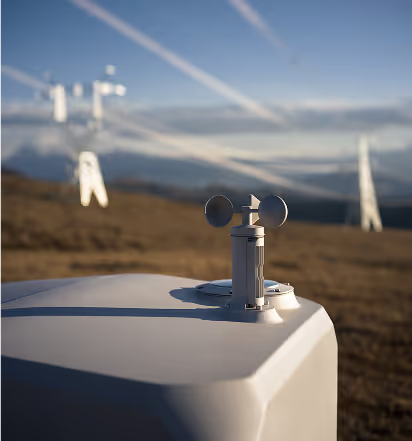
Arrow-401 LR drone and docking station
Purpose-built drone system with redundant communication electronics and a large UPS. You rely on the drone to replace other solutions dependably. Off-the-shelf drones lack this technology.
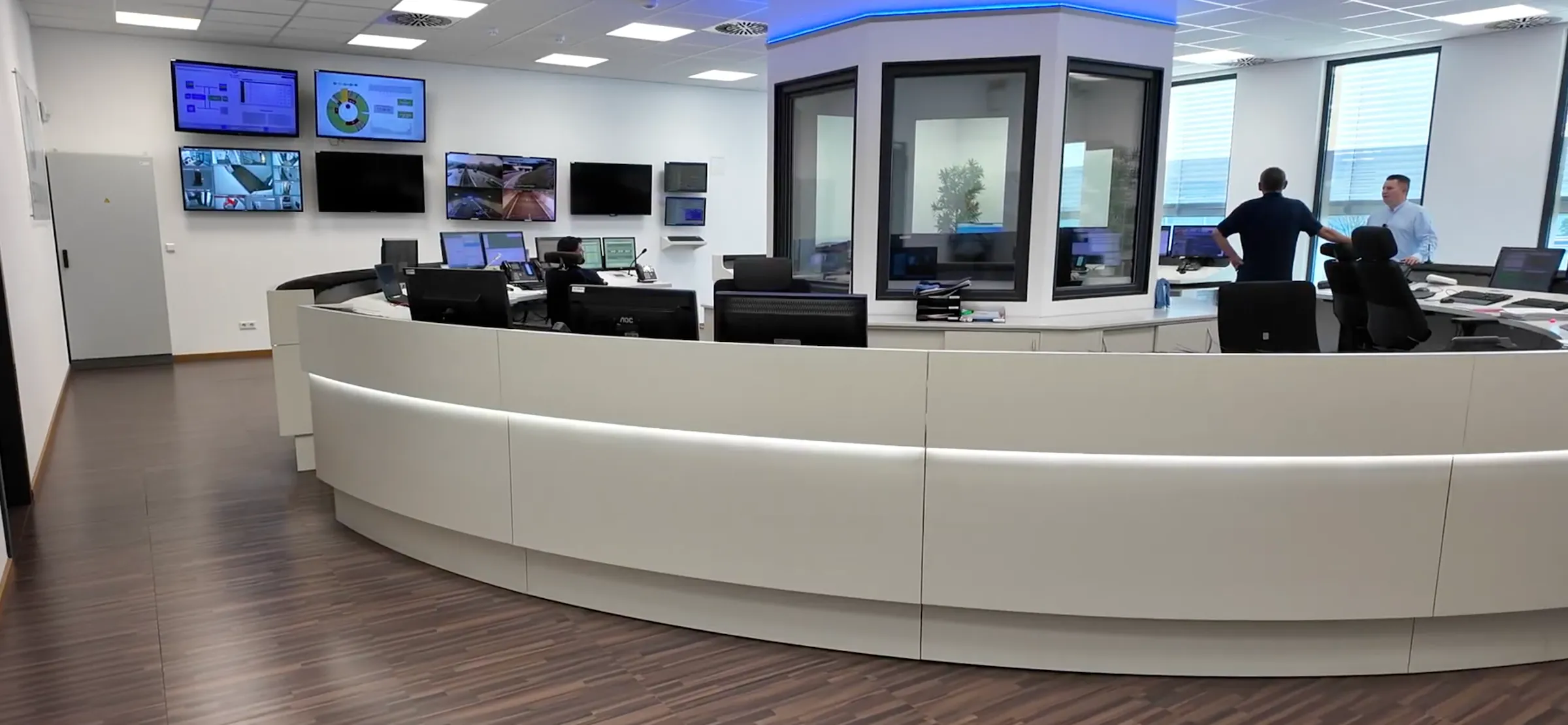
VdS-certified emergency and service control center
Alarms are handled by trained pilots on the customer side, such as the plant fire brigade, or in a VdS-certified control center. Essential for a high quality level and reliable processes, even during a power outage.
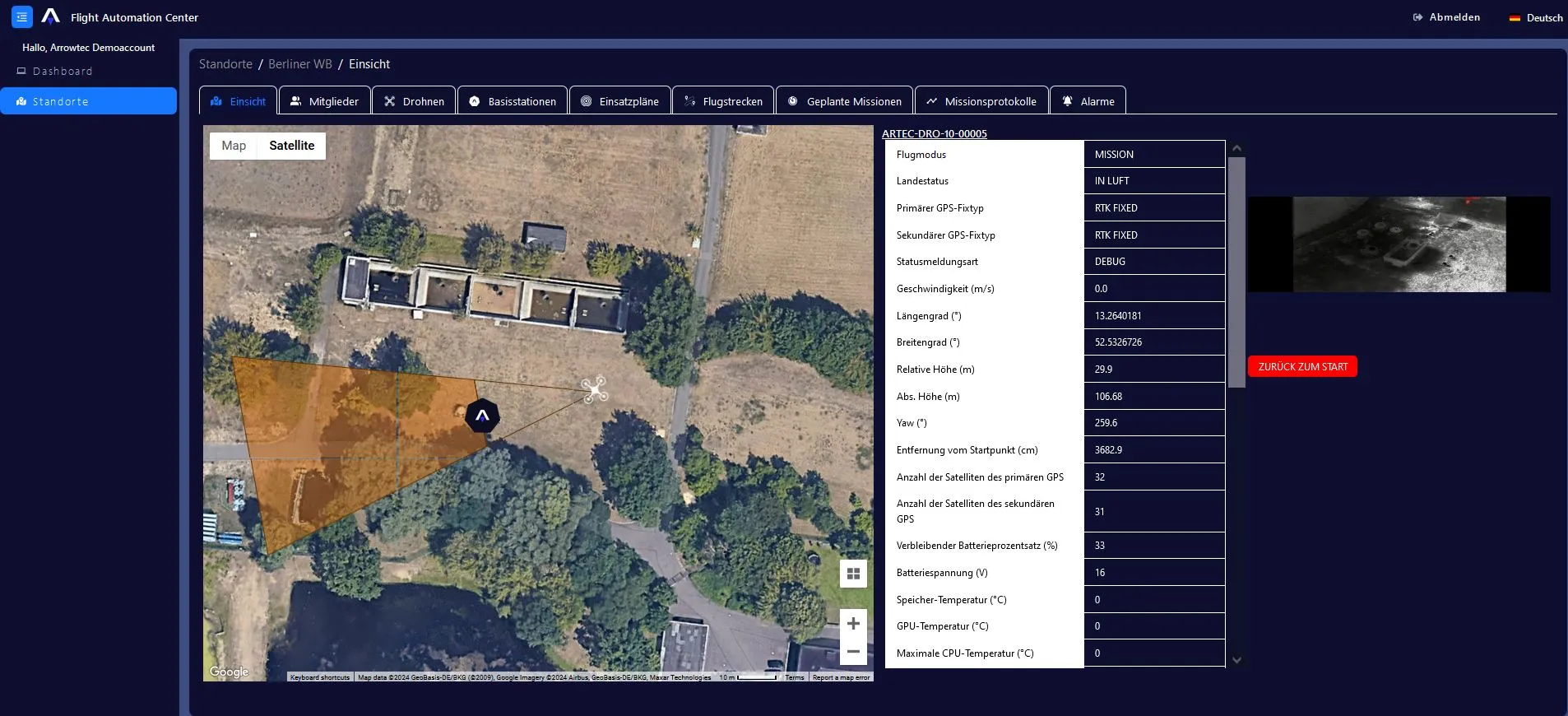
Flight Automation Center with AI
Our own secure flight automation software with intrusion AI. Controls the drone automatically, plans irregular patrols and integrates with existing sensors such as motion detectors.
Why simply putting up a fence is not enough.
A monitored security fence is only one building block. For perimeter protection and open-area security to work together, you need concept, approval, technology and operation from a single source. Security Airline takes care of all the pieces of the puzzle.
150,000+ surveillance flights
Extensive experience in drone operations across all sites.
Initial consultation with security analysis
Free and without obligation, on site or remote.
Security concept (optional)
Multi-layer concept to raise the security level, including potential insurance savings.
Project planning & EU approval
Flight planning, alarm plan and approval across the entire EU, including Switzerland and Norway.
Redundant communication & UPS
So the drone reliably replaces other solutions, even during a power outage.
Installation of drone system & sensors
Integration with motion detectors, cameras and existing infrastructure.
Regular maintenance
We keep spare parts in stock and secure the availability of your drone surveillance permanently.
Proprietary software "Flight Automation Center"
Secure in-house development with intrusion AI for maximum detection quality.
How much do you save per year?
Calculate in 30 seconds what you save each year when you replace your conventional guard service for open-area security with an autonomous surveillance drone.
Autonomous. Weatherproof.
Ready around the clock.
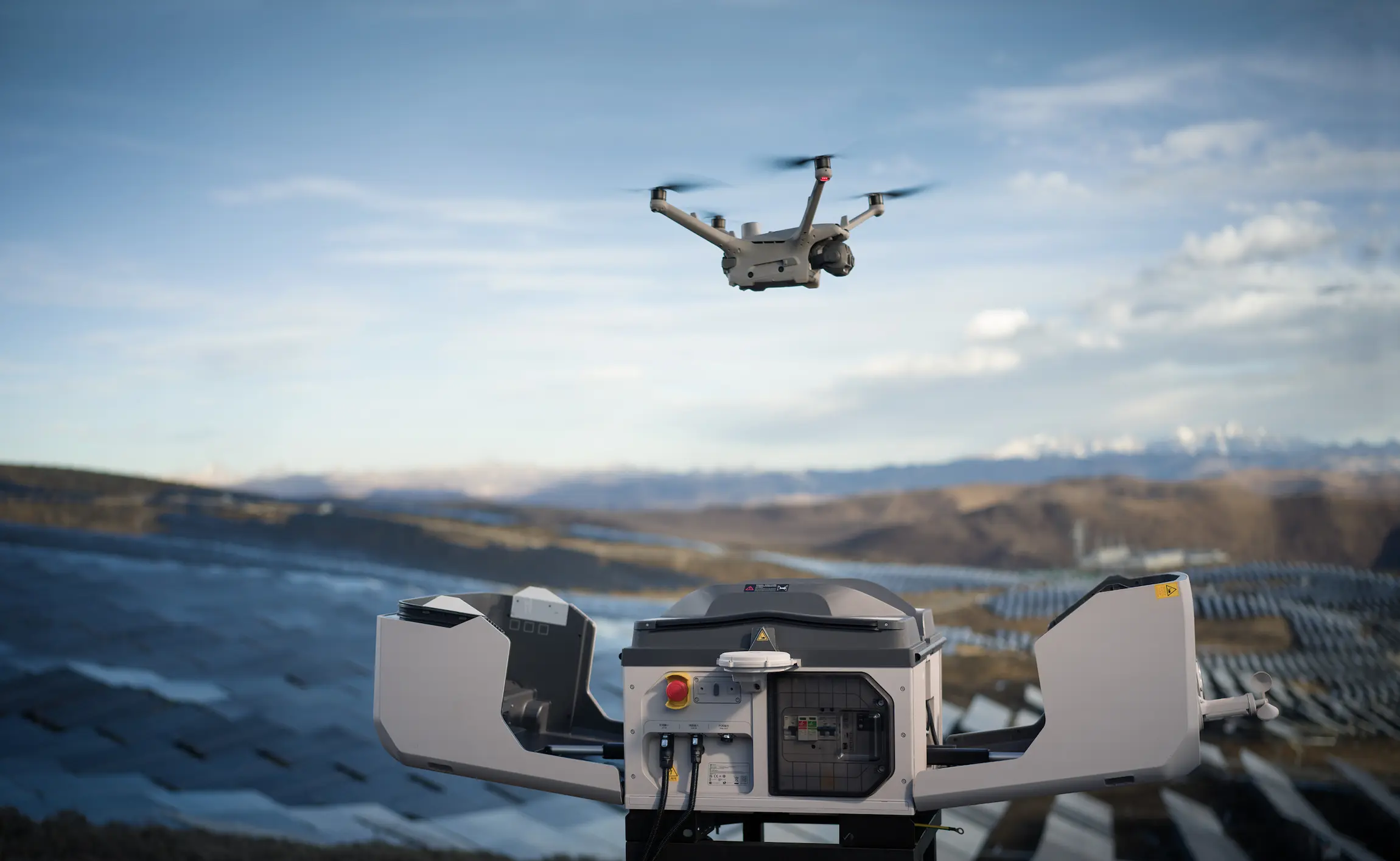
The Arrow-401 LR drone system launches on its own, when an alarm is triggered or at predefined patrol intervals. The system is fully operational at night, in wind or in sub-zero temperatures.
The rugged, VdS-certified drone is charged, protected and monitored in the integrated docking station. It handles climate control, telemetry and maintenance monitoring and thus ensures uninterrupted operation.
The result: less personnel effort, higher deployment frequency and significantly lower operating costs, especially for large, hard-to-see areas without permanent guard staffing.
Why our customers rely on drone monitoring
%201.avif)
Olaf Besser
Management
Heating network system technology from manufacturers YADOS. District heating stations and heating systems for efficient energy applications from Saxony.

Nowadays, it is increasingly important to work efficiently and cost-effectively. This also applies to entire facility management — this includes monitoring. The Security Airline system impressed us both in terms of price and technology.
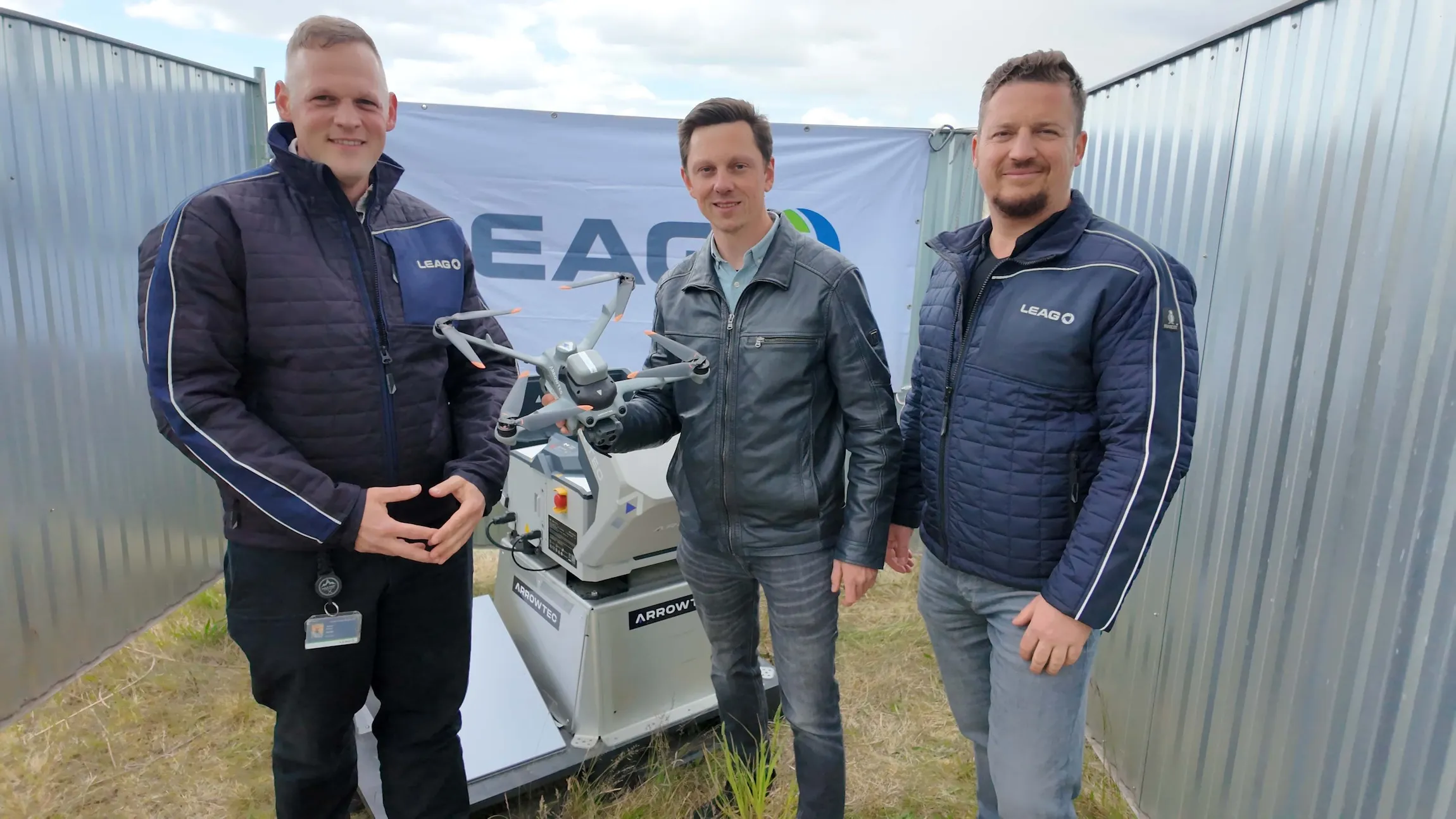
Kathi Gerstner
(press spokesperson)
The LEAG Group not only provides electricity and heat. We offer companies, cities and municipalities a wide range of other products and services.
For several months now, the Lusatian energy supplier Leag has been using several Security Airline surveillance drones in combination with artificial intelligence to monitor its industrial plants more effectively and protect them from theft and unauthorised access.
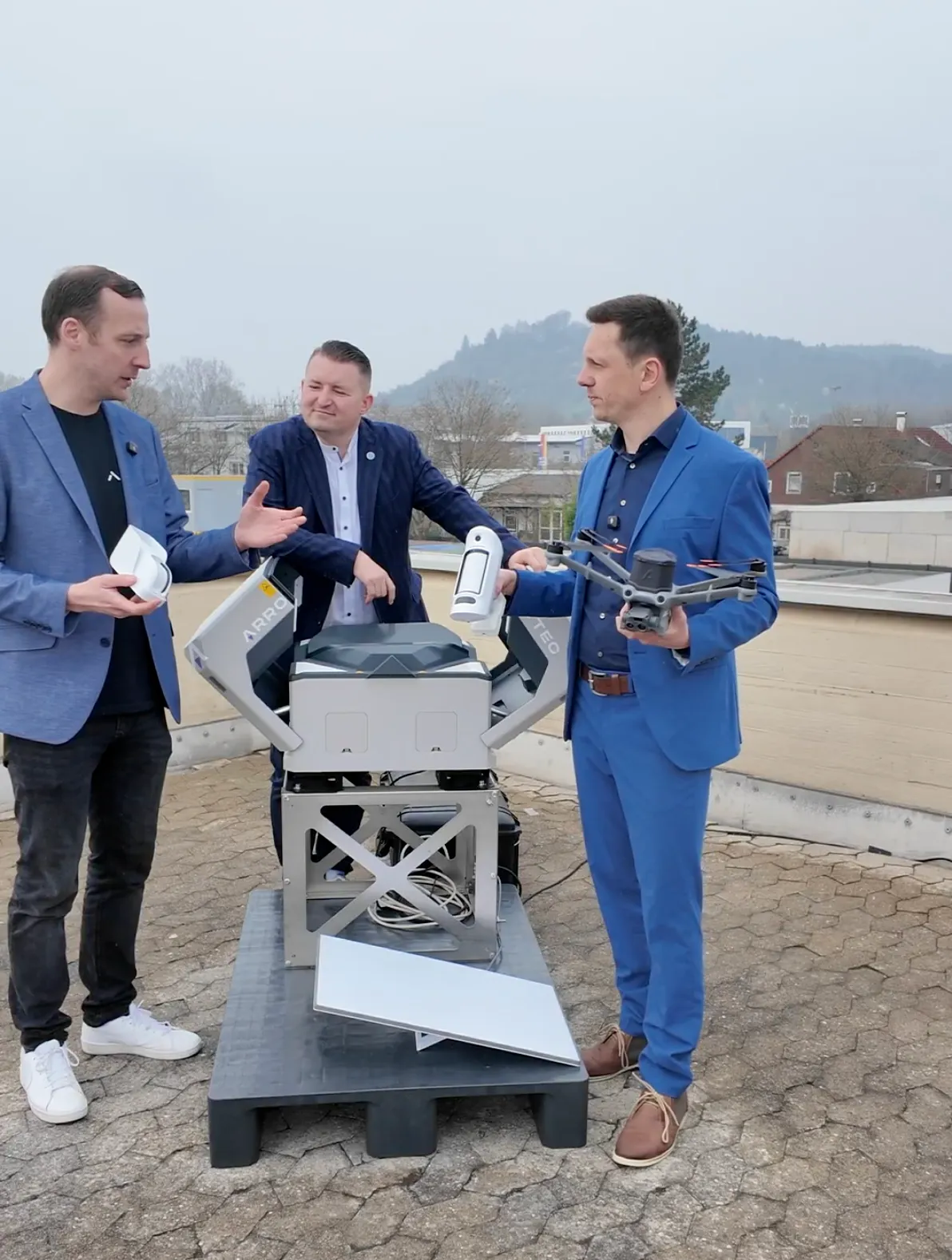
Sebastian Hanne
Business Development Manager
We offer burglary protection, convenience and automation, fire protection and security, and video surveillance. Everything integrated in one system.
Our sensors harmonize perfectly with Security Airline's drone system. After an alarm has been triggered via the infrared motion detectors, the surveillance drone flies fully automatically to the marked location and illuminates the area.

.svg)
.svg)