Counter-Drone 2026: Methods, Providers, Legal Situation
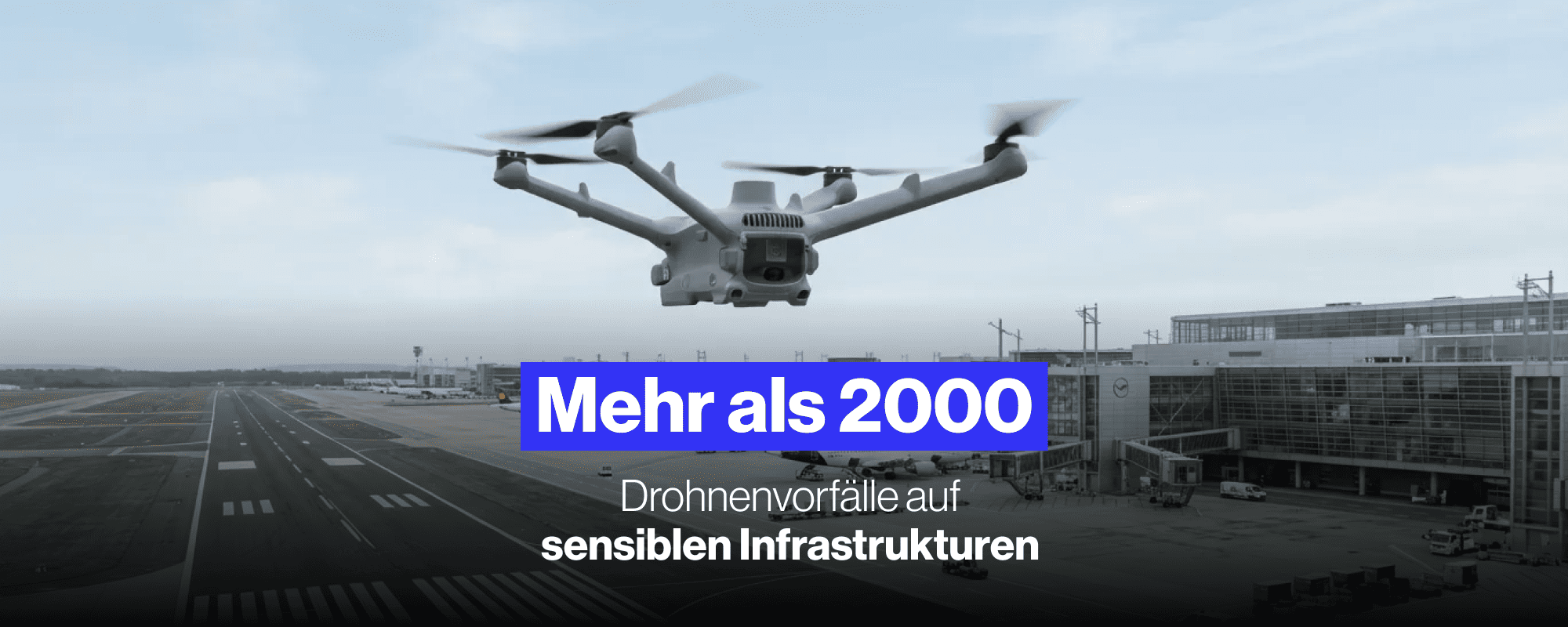
By 2026, drone defense will no longer be a niche discipline but a mandatory topic for every company with valuable outdoor assets, critical infrastructure, or sensitive production sites. The number of reported drone incidents in Germany has increased tenfold since 2022, with the Federal Criminal Police Office recording over 1,000 suspicious overflights in 2025. Concurrently, the market for detection and defense systems is growing rapidly. The range extends from simple RF scanners under 5,000 Euros to kinetic effectors in the seven-figure range.
This pillar guide provides security managers with the overview they need for an informed decision. You will learn how modern drone defense is structured, which methods are technically effective, which providers and drone defense systems are available in Germany, what is legally permissible, and which selection criteria guide an economic decision. In approximately 2,500 words, you will read everything you should know about drone defense in 2026, including a classification of the KRITIS umbrella law, the German drone wall, and ongoing EU initiatives.
Note: Drone defense is not the same as drone neutralization. While state authorities are permitted to use active effectors, civilian drone defense is limited to detection, identification, evidence collection, alarming, and tailored response by their own personnel or a Drone First Responder.
What is Drone Defense?
Drone defense (English: Counter Unmanned Aircraft System, or C-UAS/Counter UAS) refers to all technical, organizational, and legal measures used to detect, classify, document, and, in an emergency, neutralize unmanned aerial vehicles. In a narrower sense, the term describes active effectors; in a broader sense, it encompasses the entire chain from drone detection to response.
The broad definition is sensible. A drone defense system that focuses solely on the effector, without clean detection and a clear reporting chain, will not be effective for the reality faced by German companies in 2026.
Methods of Drone Defense
Drone defense employs various methods, which are typically combined. Choosing only one method leaves blind spots.
Radio Reconnaissance and RF Detection
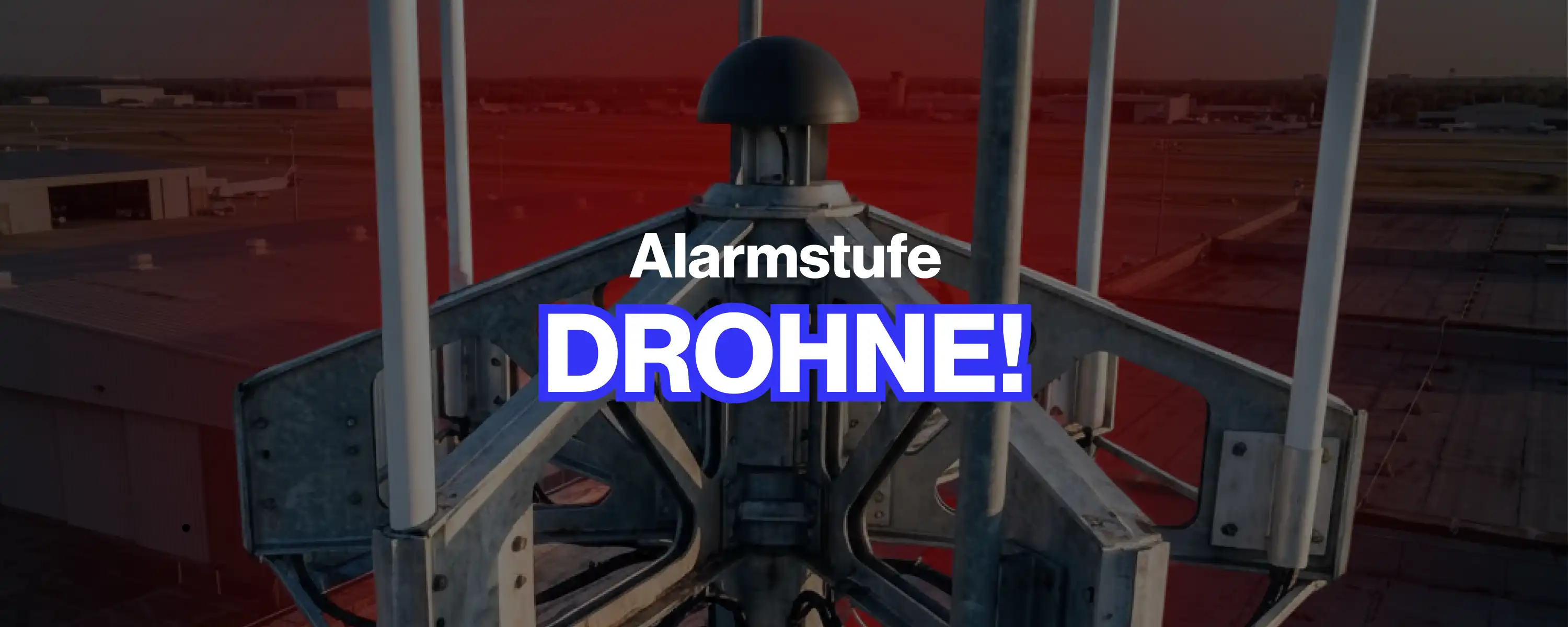
RF sensors analyze the radio spectrum and detect the control link between the drone and the pilot. They provide drone type, flight direction, and pilot's position. Strength: precise, early, low resource consumption. Weakness: they fail with fiber-optic drones and drones flying in autonomous mode without a radio connection.
Radar
High-resolution micro-radars in the X- or Ku-band can detect even very small airborne objects, are weather-independent, and operate day and night. Strength: detects everything that flies. Weakness: high price, false alarms from birds, limited range with obstacles.
Optical Sensors and Thermal Imaging
HD cameras with long-range telephoto lenses and thermal imaging cameras provide visual verification. They are indispensable for distinguishing a drone from a bird and provide legally admissible evidence. Weakness: without cues from radar or RF, cameras must pan over large areas, which becomes complicated with multiple targets.
Acoustic Sensors
Microphone arrays detect typical motor signatures of multi-rotor and fixed-wing aircraft. They are inexpensive and complement other sensors at short range, especially in urban environments.
Sensor Fusion and AI
Only the combination of sensors via a central situational awareness platform provides the necessary reliability. AI models classify drone types and behavior, reduce false alarms, and prioritize responses. This is the core of any serious drone defense system.
Countermeasures: Jamming, Spoofing, Kinetic
Active countermeasures range from radio jammers to GNSS spoofing and kinetic neutralization via net capture, high-energy lasers, or anti-drone cannons. In Germany, these countermeasures are exclusively reserved for authorities. Companies cannot legally deploy them but can be integrated into emergency response chains with authorities.
Drone First Responder as a Civilian Solution
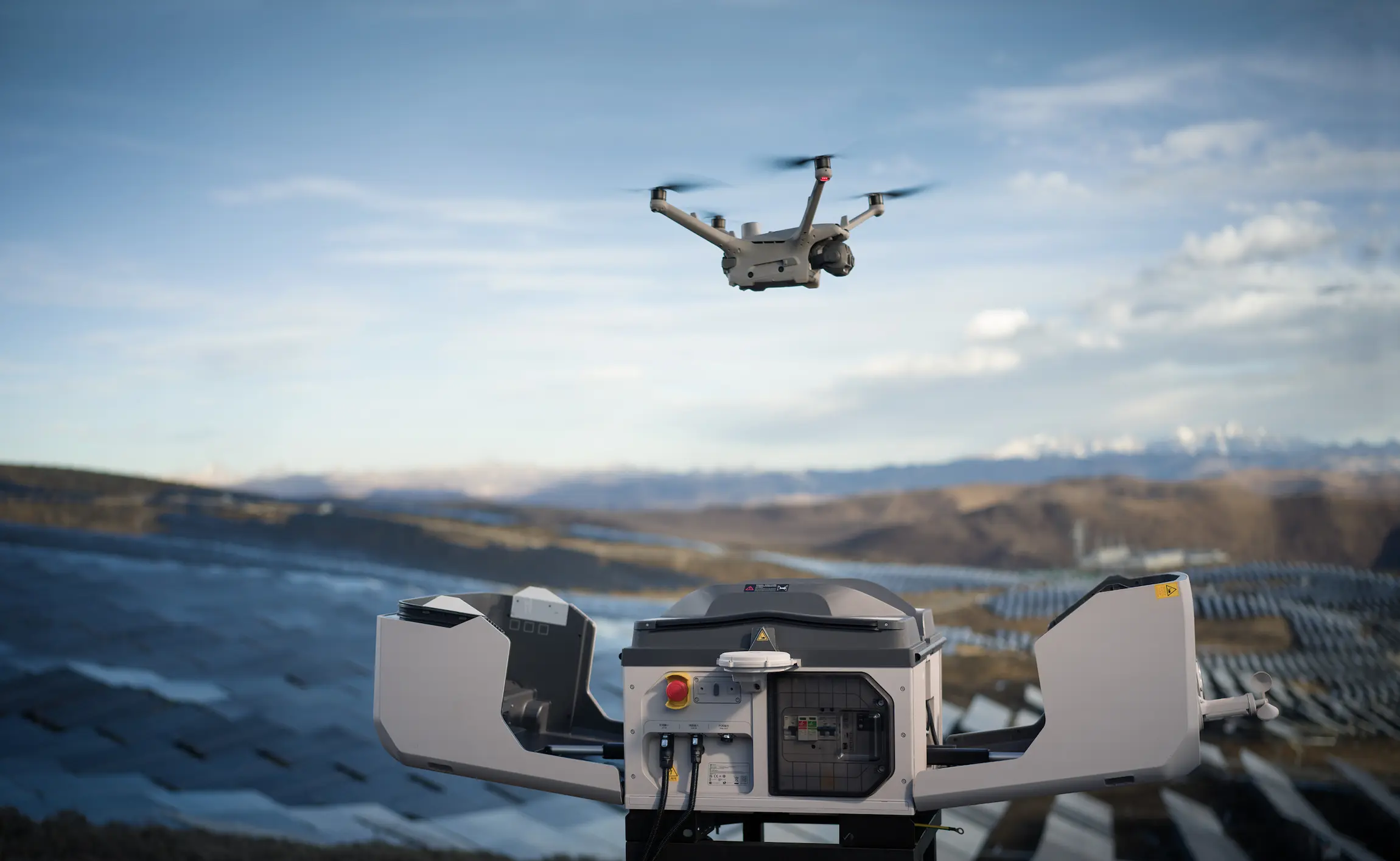
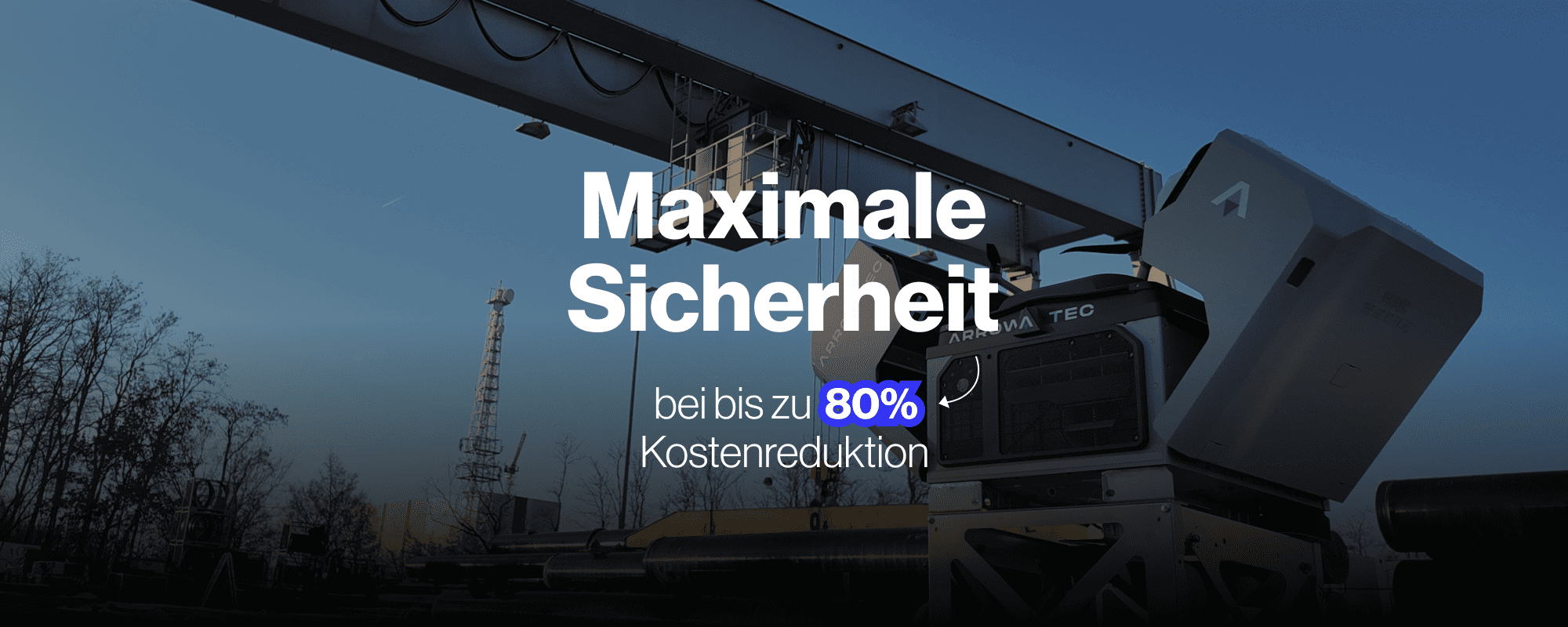
When active countermeasures are unavailable, speed becomes the critical factor. A dedicated autonomous drone that can be on-site in 30 seconds and provides live images to plant security and police closes the gap between detection and official response. More at Drone First Responder.
Drone Defense Systems Overview
Drone defense systems can be grouped by range and deployment scenario:
- Tactical / Portable: Range: up to 1 km; Typical use: Event security, mobile operations; mostly mobile RF scanners and handheld devices
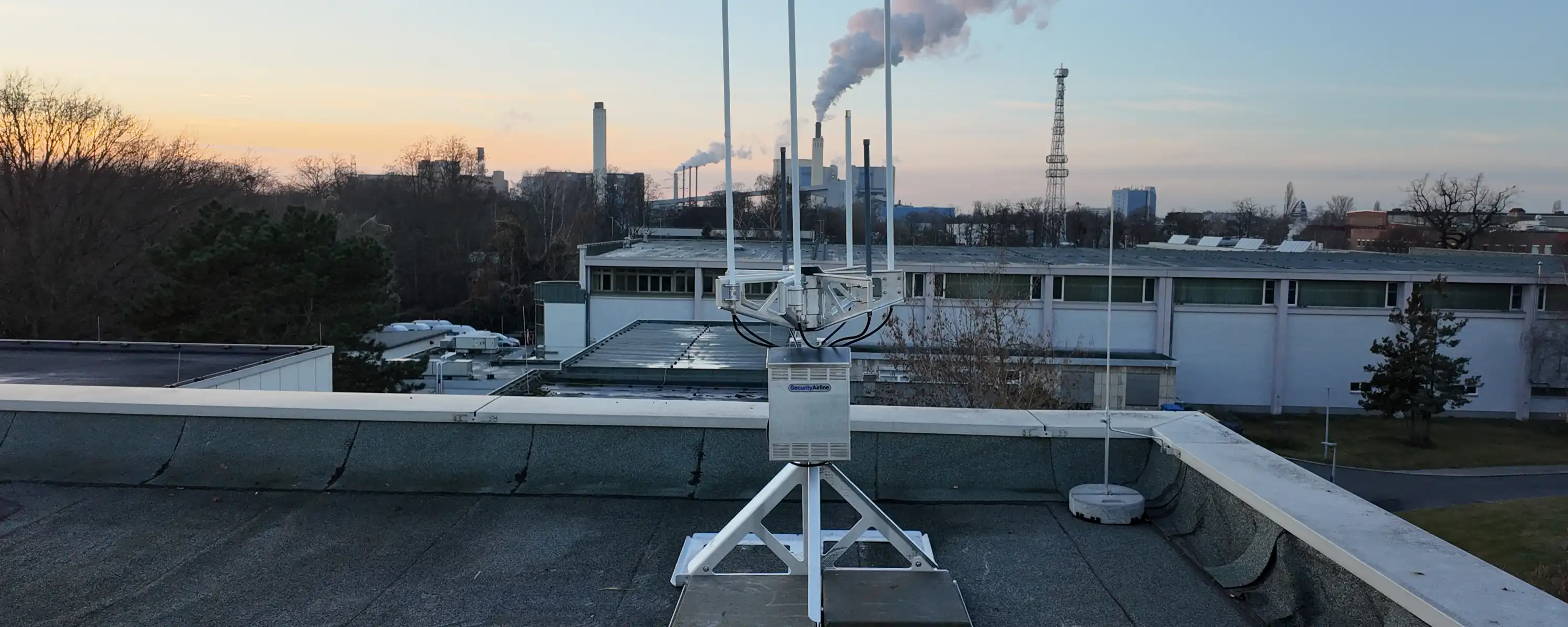
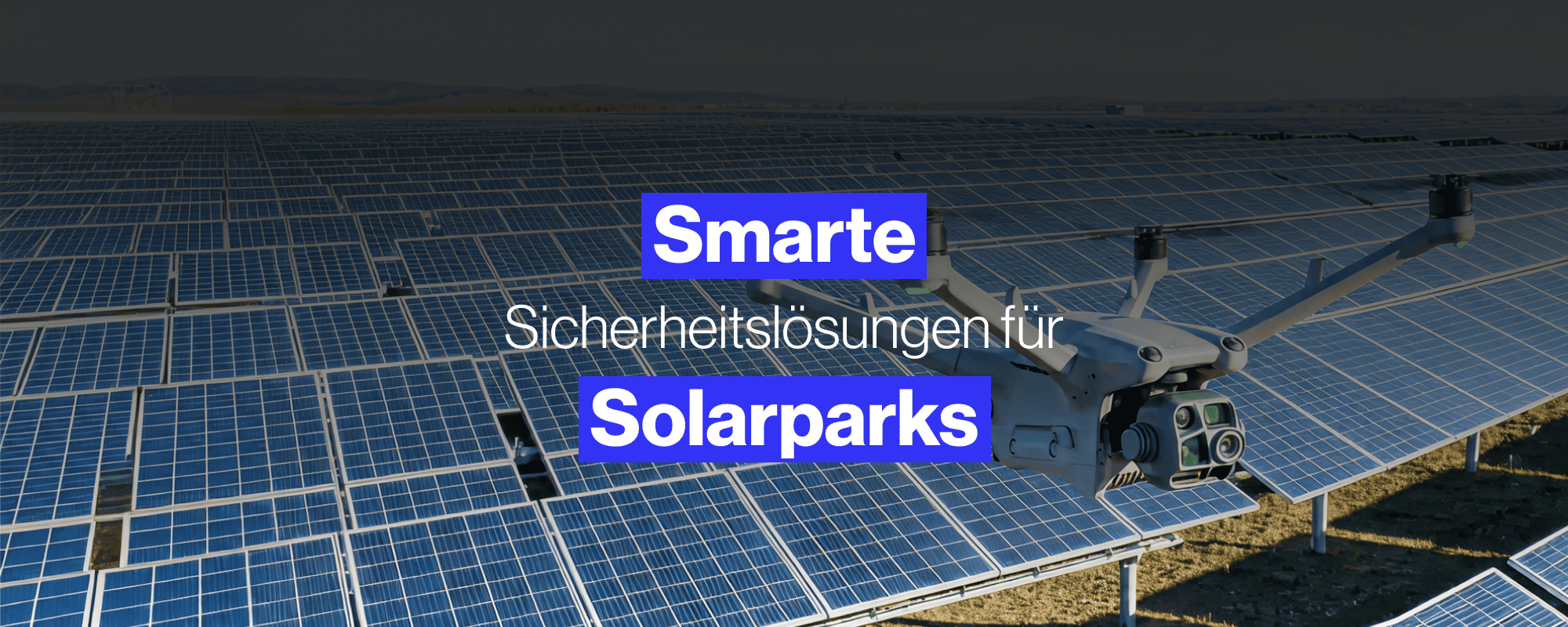
- Site Protection: Range: 1 to 5 km; Typical use: Industrial sites, logistics hubs, solar and wind farms; integrated sensor fusion with control center connectivity, e.g., Security Airline's Mini-Drone Wall
- Critical Infrastructure / KRITIS: Range: 5 to 15 km; Typical use: Airports, ports, data centers, large-scale industry; sensor network comprising radar, RF, and optics with connected DFR control center
- Military / Strategic: Range: over 15 km, multiple layers; Typical use: Military bases, NATO protection, drone wall; systems like Rheinmetall Skynex, Diehl IRIS-T SLM, or MBDA laser effectors
For most civilian users, the Site Protection to Critical Infrastructure class is relevant. Pure tactical solutions are inexpensive but do not provide 24/7 situational awareness or auditability.
Drone Defense Manufacturers in Germany
The German drone defense market has become highly professionalized since 2022. In the military segment, established arms and sensor manufacturers dominate, while in integrated civilian protection for industry and critical infrastructure (KRITIS), Security Airline has positioned itself with its own control center and autonomous drone:
- Hensoldt (Taufkirchen): Radar systems and sensor fusion, focus on military and critical infrastructure (KRITIS).
- Rheinmetall (Düsseldorf): Skynex and Skyranger effector systems, focus on military effectors.
- Diehl Defence (Überlingen): IRIS-T SLM, networked air defense.
- Security Airline (Berlin): integrated mini-drone wall with sensors, autonomous drone Arrow-401 and control center connection.
Important when choosing: a provider that only supplies sensors covers the situational awareness but does not handle 24/7 operations. A provider that only supplies effectors is practically unhelpful to companies due to the legal situation. Anyone who does not want to build their own security organization needs an integrator with a control center connection.
C-UAS and Counter-UAS explained
The terms C-UAS and Counter-UAS are used synonymously and describe the same as drone defense, with a focus on NATO and industry terminology. Counter-UAS systems typically follow a Detect-Track-Identify-Defeat logic, or DTID for short:
- Detect: Sensor detects drone.
- Track: Position and flight path are continuously tracked.
- Identify: Drone type and risk are determined, AI-supported.
- Defeat: Reaction, from alerting and evidence collection to kinetic neutralization.
In the civilian sector, the DTID chain ends at the Identify and React stages. The Defeat component remains reserved for state authorities. This is precisely where the value of a Drone First Responder system lies: it complements the reaction stage without deploying active countermeasures.
Legal Situation in Germany
The legal assessment of drone defense is strictly regulated in Germany. The cornerstones:
- Air Traffic Act (LuftVG) and Aviation Security Act (LuftSiG): Interventions in airspace are reserved for state authorities. Actively interfering with or shooting down a drone by private individuals is generally punishable.
- Telecommunications Act (TKG): Radio interference is generally impermissible, and operating jammers without permission is an administrative offense.
- EU Drone Regulation 2019/947 and 2019/945: Regulates the operation and classification of drones, applies directly.
- BSI Act and KRITIS Umbrella Act: Define protection obligations, reporting channels, and the state of the art. More in the article KRITIS Umbrella Act 2026.
- GDPR: Anyone recording image data from drones or individuals must clearly document the purpose, legal basis, and storage periods.
In the civilian sector, detection, classification, evidence collection, and alerting are permitted. Anyone who sees an unauthorized drone on their company premises should call the police and document it. Self-help using a net or shotgun is generally punishable.
Drone Defense in Context: KRITIS Umbrella Act and Drone Wall
The German government is establishing the German Drone Wall, a tiered protection system along the eastern flank and around military installations. More background can be found under German Drone Wall 2026. For civilian operators: the Wall concept is transferable to industrial sites, in a smaller, more cost-effective version.
The KRITIS umbrella law mandates drone defense for critical infrastructure operators starting in 2026. Without a suitable concept, a failed BBK audit is a risk, with fines up to 10 million Euros for repeat offenses. Drone defense is therefore no longer optional, but a mandatory part of a KRITIS security concept.
Selection Criteria and Costs
Before selecting a provider, an honest threat analysis is essential. You should check the following criteria:
- Sensor Diversity: RF, radar, optics, and acoustics should be combinable. Pure RF solutions do not detect fiber-optic drones.
- Situational Awareness and Sensor Fusion: AI-powered platform with a low false alarm rate.
- Connection to a certified control center: 24/7 operation, VdS certification, connection to police.
- Drone First Responder optional, but highly recommended for KRITIS and large industrial sites.
- Auditability: Documentation, evidence storage, reporting functions.
- Scalability: Rental models avoid high initial investment.
Typical Costs 2026:
- Tactical RF, mobile: Investment per site: 10,000 to 30,000 Euros; Rental model per month: 1,500 to 3,000 Euros
- Site Protection (Sensor Fusion + Control Center): Investment per site: 120,000 to 250,000 Euros; Monthly rental model: 3,500 to 8,000 Euros
- Site Protection plus DFR drone: Investment per site: 200,000 to 400,000 Euros; Monthly rental model: 5,000 to 12,000 Euros
- KRITIS full equipment with radar: Investment per site: from 350,000 Euros; Monthly rental model: from 9,000 Euros
Rental models lower the entry barrier, make drone defense predictable, and include maintenance, updates, and control center services. For most KRITIS operators, this is the most economically viable option.
Case Study: Protection Concept for a Logistics Center
A logistics hub with 80,000 square meters of outdoor space, three halls, and a stored value density of approximately 50 million Euros reported multiple drone overflights in 2025. Development of a KRITIS-compliant protection concept in four modules:
- RF detection with a range of 5 km, plus acoustic sensors at the perimeter.
- High-resolution micro-radar for protection against autonomous drones.
- Situational awareness platform with AI classification, connected to the Security Airline control center.
- Autonomous security drone Arrow-401 in a Drone-in-a-Box station, launches upon alarm in 30 seconds, verification flight in 90 seconds.
Investment in the rental model: approximately 6,500 Euros per month. Compared to two additional security guards per shift, this halves personnel costs while providing higher detection performance. More on security guard models in logistics in the article Security Guards in Logistics Centers and on the classic surveillance drone in the article Surveillance Drone for Object Protection.
Conclusion
Drone defense 2026 is sensor fusion plus situational awareness plus a reporting chain. Those who take current threats seriously approach the topic in layers, not as individual products. Civilian users focus on detection, evidence collection, and Drone First Responders, while government users add active countermeasures in conjunction with the German Armed Forces and Federal Police.
With the KRITIS umbrella law, drone defense will become mandatory for around 4,500 companies in Germany by 2026. Starting early avoids rushed projects and simultaneously closes acute security gaps. Security Airline supports you from the initial threat analysis to audited continuous operation.
Next Steps
Do you want to establish a KRITIS-compliant drone defense concept by 2026?
We analyze your location, compare suitable drone defense systems, plan sensor technology, situational awareness, and Drone First Responders, and manage operations through our VdS control center.
- On-site or remote threat analysis
- Selection of drone defense systems tailored to your risk class
- Cost-effectiveness calculation: rental model vs. purchase
- Audit preparation for KRITIS and NIS2
FAQ
What does drone defense mean?
Drone defense encompasses all technical, organizational, and legal measures for the detection, classification, documentation, and, in the military sector, neutralization of unmanned aerial vehicles. In the civilian sector, it is limited to detection, evidence collection, and alarming.
What methods of drone defense are there?
The most important methods include RF detection, radar, optical and thermal imaging cameras, acoustic sensors, AI-supported sensor fusion, radio jammers, GNSS spoofing, and kinetic effectors. In Germany, active effectors are reserved for government agencies.
What drone defense systems are available in 2026?
From mobile RF scanners for under 10,000 Euros, to site protection solutions starting at 120,000 Euros, up to full KRITIS setups with radar and kinetic effectors starting at 350,000 Euros. Rental models start at 1,500 Euros per month.
Who are the most important drone defense manufacturers in Germany?
In the military sector, Hensoldt, Rheinmetall, and Diehl Defence are among the big names. For integrated civilian protection of industry and critical infrastructure (KRITIS) with sensor technology, control center, and autonomous drones, Security Airline is an established provider.
What is the difference between drone defense and C-UAS?
There is no conceptual difference; C-UAS is the English acronym for Counter Unmanned Aircraft System. In terms of content, it describes a Detect-Track-Identify-Defeat logic, which in the civilian sector remains limited to detection and reaction.
Which drone defense systems are permitted for companies in Germany?
Detection, classification, evidence collection, and alerting are permitted. Active countermeasures such as jammers or kinetic neutralization are reserved for state authorities. A company's own autonomous drone may be deployed as a Drone First Responder within permissible limits.
How much does a drone defense system cost for an industrial site?
A site protection solution with sensor fusion, a situational awareness platform, and control center connectivity starts at around 3,500 Euros per month in a rental model. Full KRITIS setups with radar and Drone First Responders typically range from 6,000 to 12,000 Euros per month.
How does drone defense work in a rental model?
Sensors, software, maintenance, and control center operations are billed monthly. Providers install, operate, and update the system; the customer uses the situational awareness data and defines the response chains.
Is there drone defense without countermeasures that is legally compliant?
Yes. Detection and evidence collection are permitted in Germany and will even be mandatory for KRITIS operators by 2026. Drone First Responders complete the response level without deploying active countermeasures.
What role do the German Armed Forces play in civilian drone defense?
The German Armed Forces operate the military drone wall and share situational awareness data with the Federal Police and KRITIS operators via the national drone defense center. Civilian providers integrate their situational awareness data into these structures without deploying state-owned countermeasures themselves.
What is a Counter-UAS system?
A Counter-UAS system is an integrated drone defense system with sensors, situational awareness software, and a response chain. Range, countermeasures, and auditability differentiate tactical solutions, site protection solutions, and KRITIS systems.
Which drone defense system is suitable for a KRITIS operator?
Site Protection or full KRITIS equipment with sensor fusion, AI-powered situational awareness, a VdS control center, and ideally a Drone First Responder. Pure tactical solutions are generally not sufficient for KRITIS audits.
Drohne + Ladestation
Drohne + Ladestation
Ihr Gelände verdient mehr als Standard-Sicherheit.
Möchten Sie die Sicherheit an Ihrem Standort mit einer Überwachungsdrohne, oder Drohnendetektion erhöhen und dabei Kosten einsparen?
Sie haben Fragen? Nutzen Sie unsere kostenlose Erstberatung!

.svg)
.png)


.webp)