Drone Security for Logistics: Surveillance, Defense & Protection 2026 | Security Airline

Every three days, an entire truckload disappears in Germany. Freight crime causes 1.3 billion euros in damage annually in this country – and the trend is rising. In addition, there are around 900 million euros in consequential costs due to production losses, contractual penalties, and reputational damage. These figures are not from crime novels, but from current reports by the Federal Office for Logistics and Mobility (BALm) and Munich Re.
While the threat situation escalates, many logistics companies still rely on the same security concepts as ten years ago: security guards, fences, and stationary cameras. However, these measures reach their limits in large logistics areas – both economically and operationally.
This guide shows how autonomous surveillance drones and drone defense systems elevate the security of logistics centers to a new level – faster, more reliable, and more cost-effective than traditional approaches.
Why Logistics Centers Need New Security Solutions Today
Freight Crime in Germany: The Figures
The scale of the problem is often underestimated. Current data paints an alarming picture:
- 1.3 Billion Euros in direct damage from cargo theft in Germany per year. In addition, there are an estimated 900 million euros in consequential costs – from production losses to higher insurance premiums.
- 438 Percent Increase in cargo thefts in Europe within three years. Germany recorded a total of 359 registered cases in 2024 – accounting for 20.6 percent of all incidents in the EMEA region.
- 63.3 Percent of all thefts occur in parking lots and rest areas. But 18 percent take place directly in warehouses and on company premises – where companies should have control.
- 88 Phantom Carrier Cases in Germany in the first half of 2025 alone. In this scam, criminals pose as legitimate carriers, take possession of shipments, and disappear. The number has already doubled compared to the entire previous year.
Organized crime is operating with increasing professionalism. Perpetrators use drones for reconnaissance of premises, identify weaknesses in security concepts, and plan attacks with military precision. Those who still rely solely on passive security measures today make it unnecessarily easy for criminals.
Why Traditional Security Concepts Are Reaching Their Limits
Most logistics centers have basic security: fences, stationary cameras, access controls, and in many cases, an external security service. These measures worked for years – but the underlying conditions have changed:
Security guards are becoming scarce and expensive. The security services market is suffering from a massive shortage of skilled personnel. Personnel costs are rising, and availability is decreasing. A 24/7 security service for a single logistics site costs 200,000 to 300,000 Euros per year – yet the site remains unprotected between patrols.
Stationary cameras have blind spots. Even a dense network of cameras cannot cover every area of large outdoor sites. Loading zones, open spaces, and parking areas at the edge of the site are often inadequately monitored. Cameras detect incidents, but they do not verify or react.
Fences don't stop anyone. A fence delays access by seconds. Without sensors that detect and immediately report climbing over or cutting through, a fence is, at best, a psychological deterrent.
New threats require new responses. Drones as reconnaissance tools, cyber freight fraud by phantom carriers, and organized gangs systematically scouting sites – conventional concepts are not designed to counter these threats. The true extent of the danger posed by unauthorized drones is revealed by a look at the current threat situation from illegal drone flights in Germany.
Drones as a Security Solution: Monitoring, Detection, and Defense
When drones in logistics are mentioned, most people think of package deliveries or inventory drones in warehouses. However, the much greater leverage lies in an area that has barely been discussed so far: drones as a security tool for protecting logistics sites.
Professional drone security involves three complementary dimensions:
Surveillance Drones: Autonomous 24/7 Site Monitoring
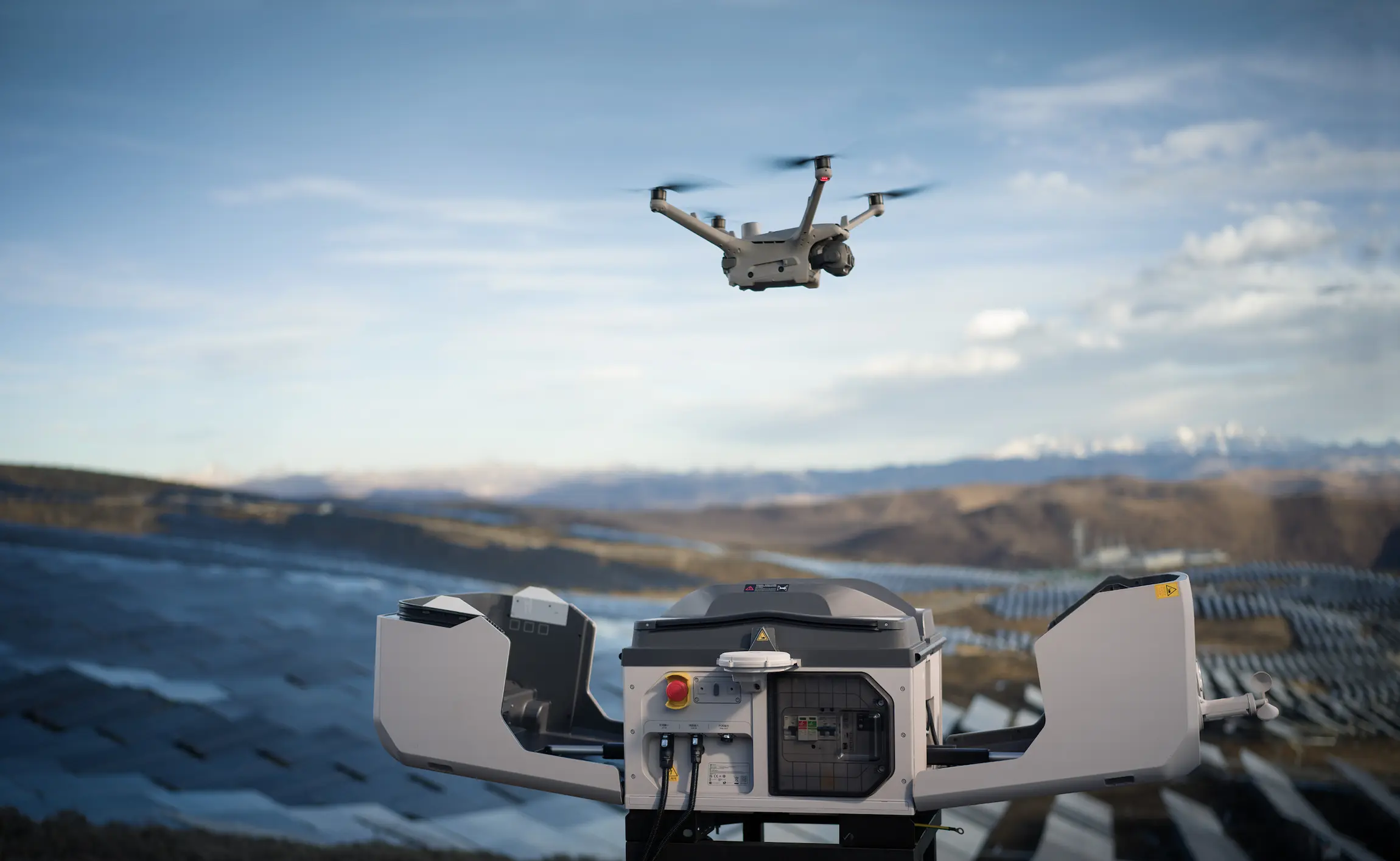
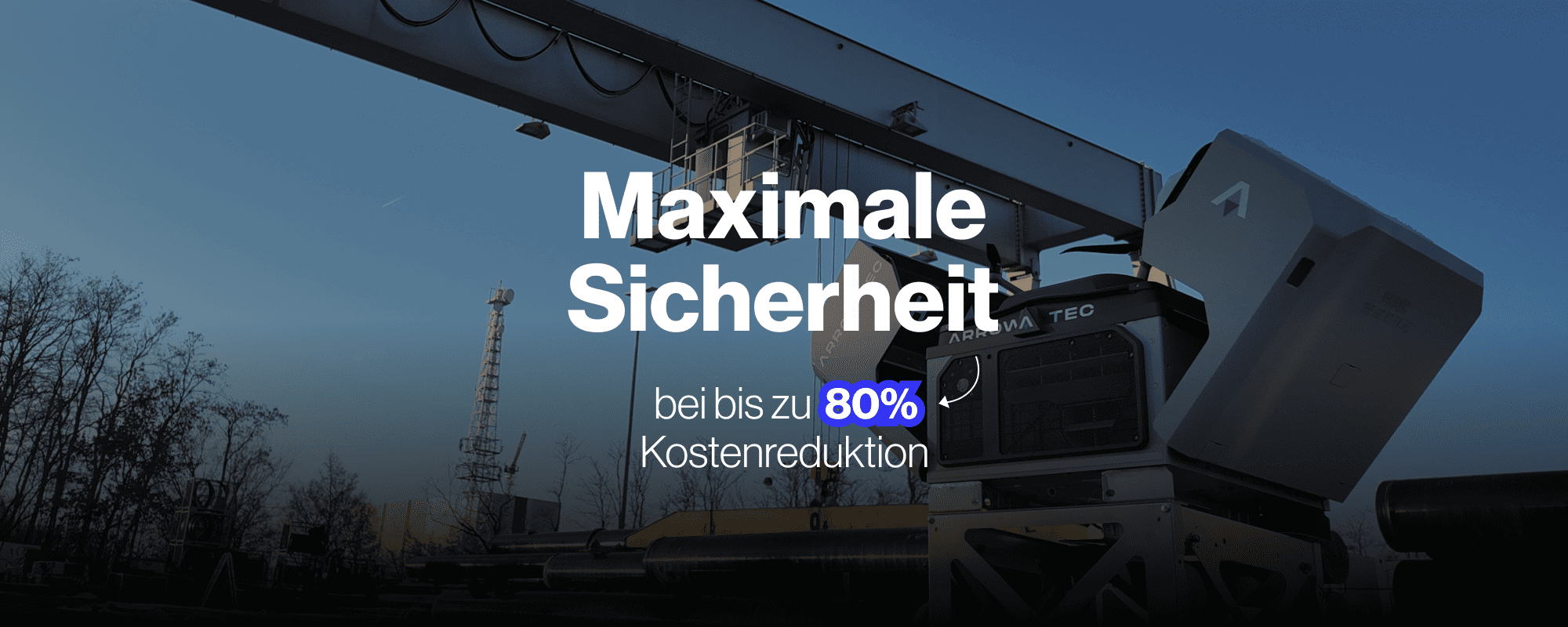
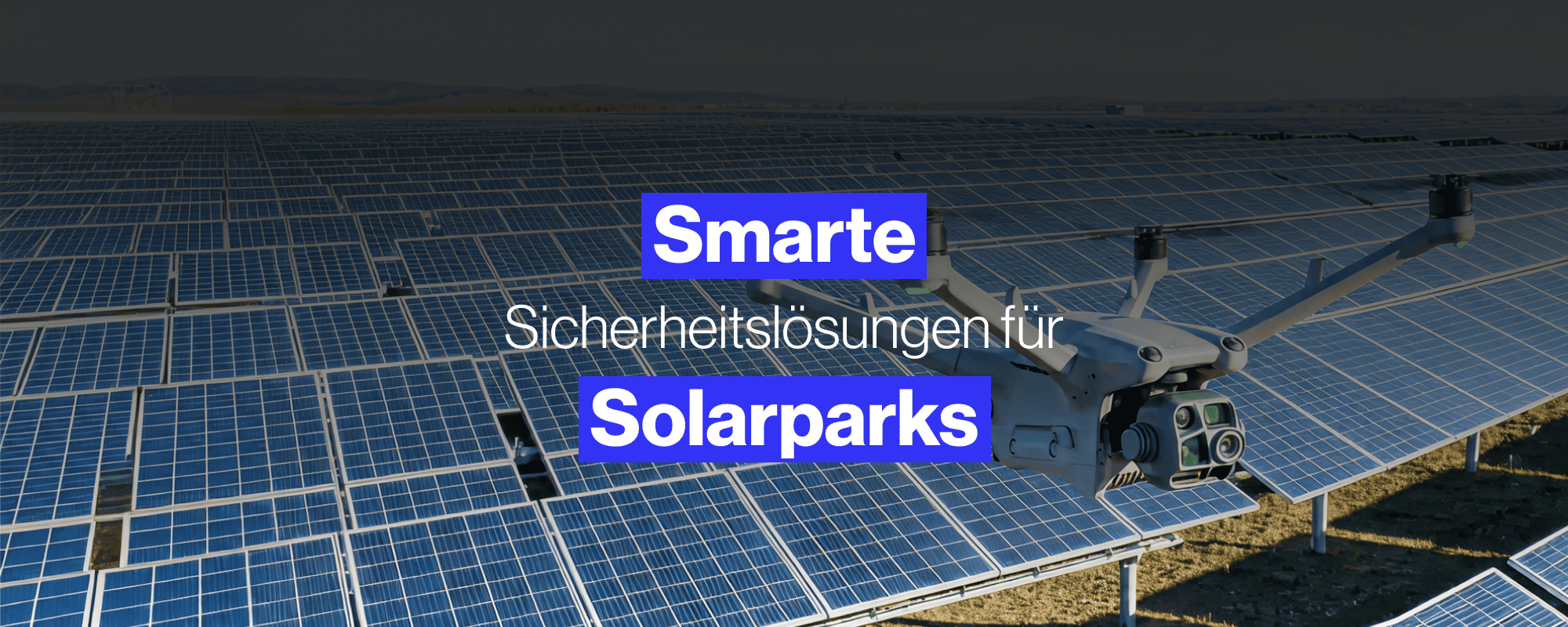
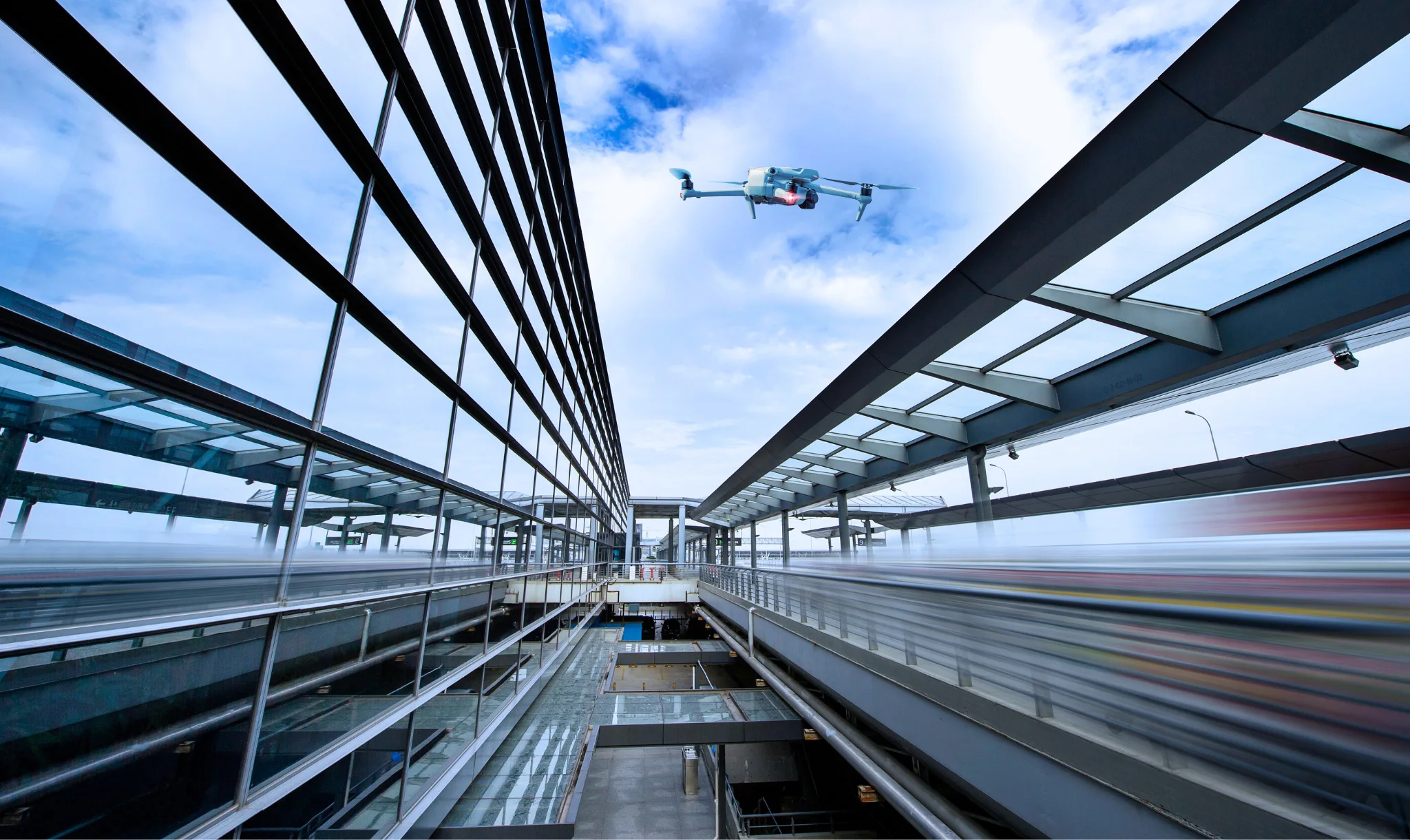
Autonomous surveillance drones launch from a weatherproof base station (drone-in-a-box), fly predefined patrol routes, or react directly to alarm messages. Equipped with HD cameras, thermal imaging sensors, and AI-powered video analytics, they detect people, vehicles, and anomalies in real-time — day and night, in rain and fog. How this automated site protection with surveillance drones works in practice is shown by a detailed look at the technology.
For logistics centers, this means: A single drone can reach and monitor a 100,000 m² site in under two minutes. It covers loading zones, open storage areas, delivery zones, and perimeter sections that are difficult for stationary cameras to reach. And unlike a security guard, it is never tired, never inattentive, and always documenting.
Drone Detection: Detecting and Locating Unauthorized Drones
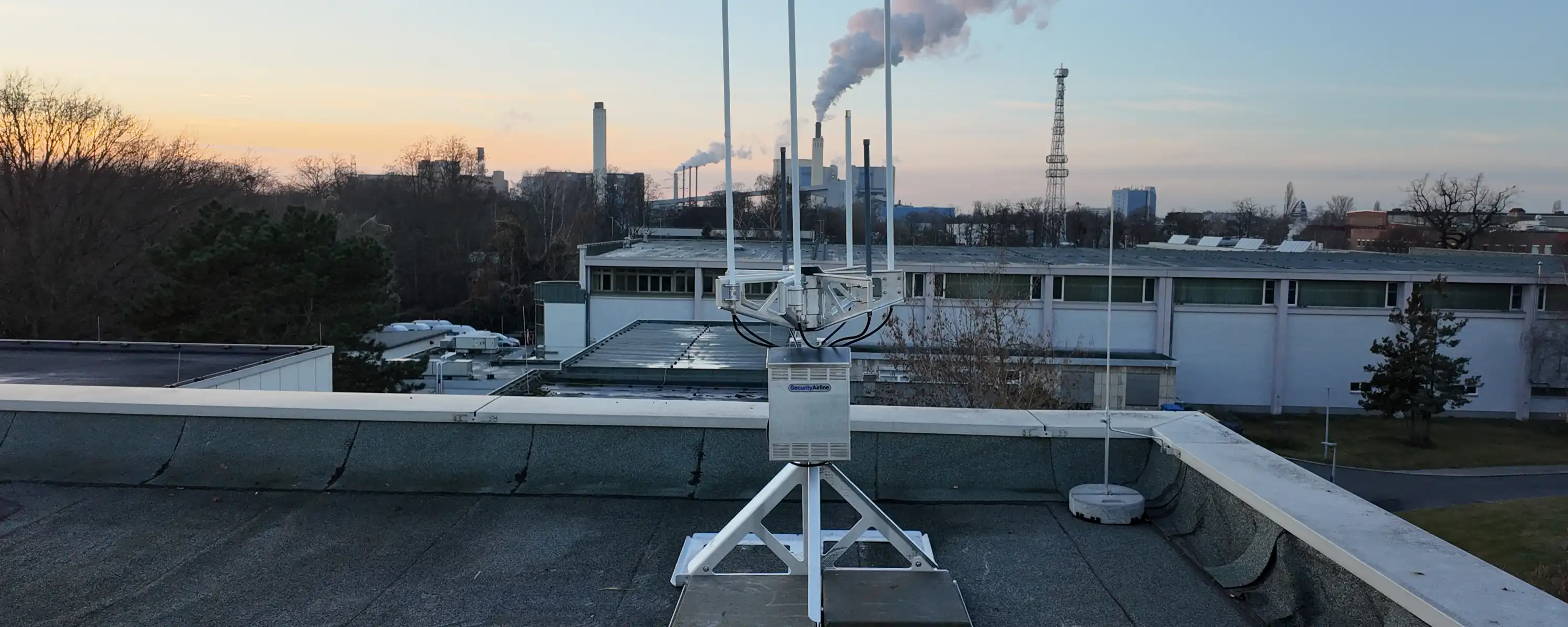
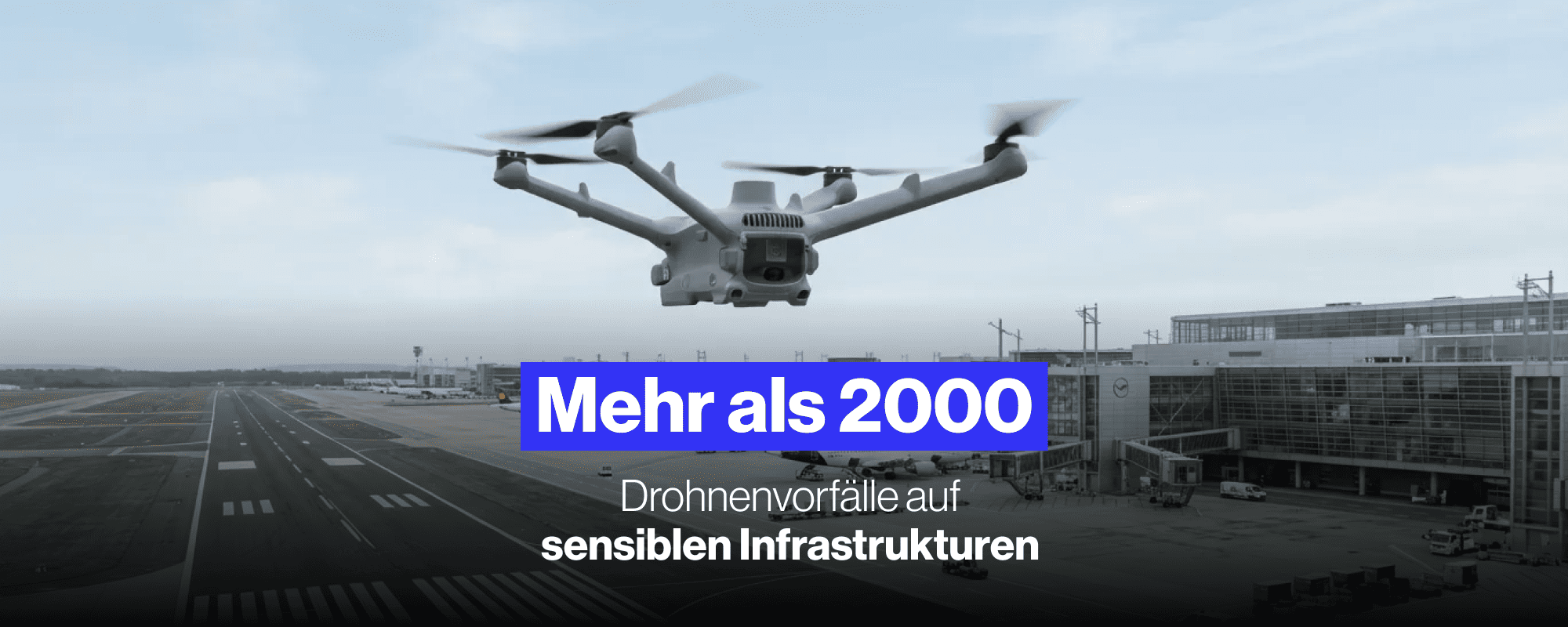
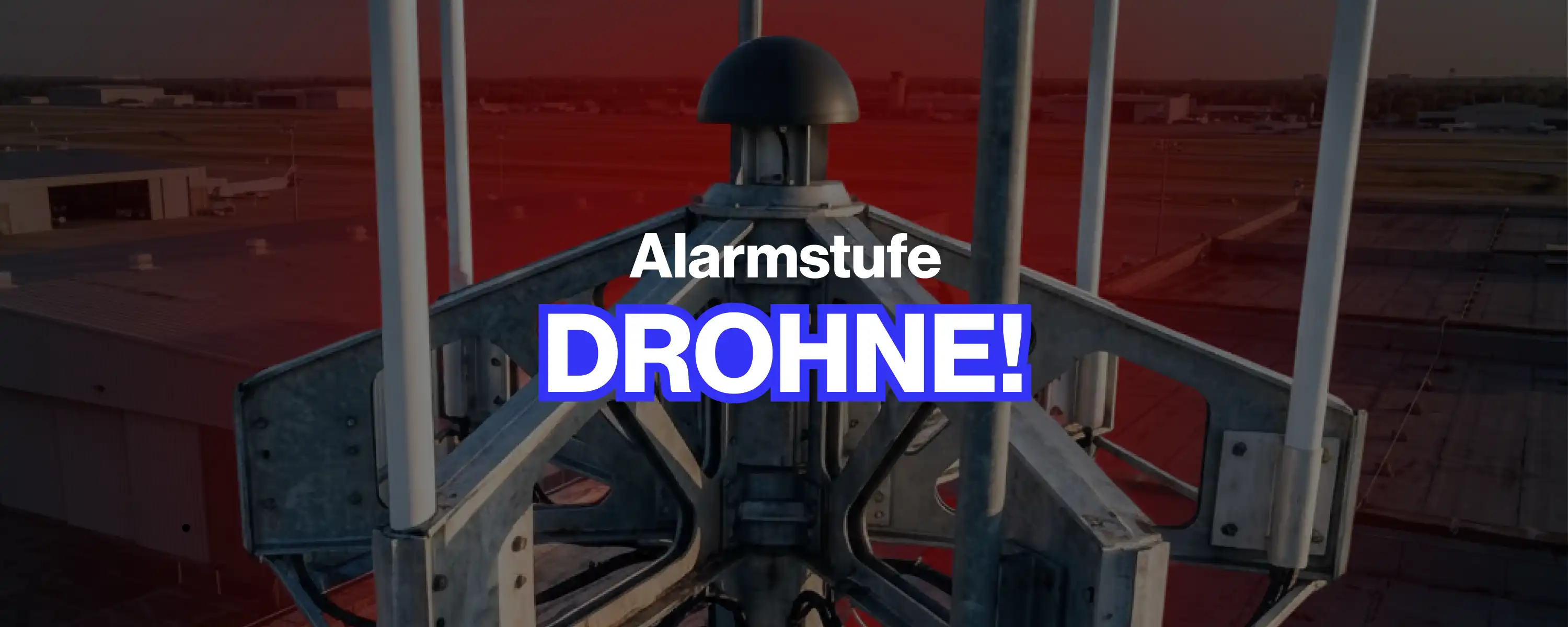
The second dimension is defensive: Drone Detection Systems detect unauthorized drones over their premises. Using radar, RF analysis, and sensor fusion, foreign drones are identified, classified, and located in real-time – including the pilot's position.
Why this is relevant for logistics companies: Criminal gangs are increasingly using drones for reconnaissance of premises, identification of valuable cargo, and analysis of security routines. Those who don't realize they are being overflown cannot protect themselves.
Counter-Drone: Protection against espionage, sabotage, and smuggling
The third dimension goes beyond detection: Counter-drone systems enable active neutralization of detected threats – by targeted disruption of control signals or by initiating coordinated countermeasures. This protection is increasingly in demand, especially near airports, data centers, or security-critical logistics sites.
A holistic security concept combines all three dimensions: Your own surveillance drone protects the premises from above, while detection and counter-drone systems protect against foreign drones.
Perimeter Protection with Drones: How to secure large logistics areas
Logistics centers are ideal for drone-supported perimeter protection: large open spaces, long perimeters, high-value goods, and often remote locations. This is precisely where drones demonstrate their decisive advantages.
Autonomous Flight Operations with Drone-in-a-Box
The core is the base station. The drone launches autonomously, performs its mission, and returns to be automatically charged. Two operating modes are typical:
Scheduled Patrol: The drone flies predefined routes according to a schedule – for example, a perimeter round every 30 minutes. The routes and times vary deliberately (arrhythmic patterns) so that potential perpetrators cannot identify predictable gaps.
Alarm-Triggered Mission: A fence sensor, motion detector, or camera triggers an alarm. The drone launches within 30 seconds, flies to the alarm location, and delivers live video to the control center. The operator immediately verifies: false alarm or real threat. Response time drops from a typical 15 to 20 minutes to under two minutes.
AI-Powered Video Verification
The drone doesn't just send video. Integrated AI systems analyze the video stream in real-time and automatically detect:
- Persons in restricted zones
- Unknown vehicles on the premises
- Smoke development or open gates
- Movement patterns indicating an attempted break-in
This automatic classification drastically reduces false alarms and focuses control room personnel's attention on real threats.
Integration into existing security infrastructure
A Surveillance Drone for Site Security does not replace existing security technology – it enhances it. Integration typically includes:
- Alarm Integration: Automatic drone launch upon alarm from fence sensors, PIR detectors, or cameras
- VMS Integration: Integration of the drone video stream into existing Video Management Systems
- Control Center Integration: Live connection to certified emergency and service control centers (NSL) for immediate response
- IoT Connectivity: Communication with access control systems, fire alarm systems, and building automation
An alarm at the gate triggers the drone launch. The drone verifies and reports to the control center. The control center alerts the intervention service or blocks access – all within minutes instead of hours.
Drone vs. On-site Security: Cost Comparison for Logistics Companies
The most common question from logistics decision-makers: Does it pay off? The short answer: In most cases, yes – and significantly so.
What a Security Service Costs for a Logistics Center
Hourly wage rates for security services in logistics currently range between 25 and 60 Euros, depending on region, qualification, and requirements. For a medium-sized logistics center, this results in the following annual costs:
- 24/7 Security with three shifts plus substitutes: 200,000 to 300,000 Euros per year. Security is personnel-dependent, quality varies, and gaps of up to 60 minutes occur between patrols.
- Mobile Patrol with two to three nightly patrols: 18,000 to 36,000 Euros per year. Presence times are minimal, the deterrent effect is low, and documentation is limited to logbooks.
- Intervention Service upon alarm notification: 80 to 150 Euros per deployment. Response time: 20 to 45 minutes. Too late for most break-in scenarios.
What an autonomous drone system costs
Professional drone security systems are available for purchase, lease, or as Drone-as-a-Service (DaaS). Purchasing a drone, including base station, software, and installation, costs between 50,000 and 150,000 Euros. Under a rental model, companies pay between 2,500 and 6,000 Euros per month. Comprehensive DaaS packages, including operation, maintenance, and control center connection, cost 3,500 to 8,000 Euros monthly.
A direct comparison: Logistics site 60,000 m²
A concrete example calculation for a typical logistics center with 60,000 m² of outdoor area, a perimeter length of 1.2 km, loading zones on three sides, and parking space for 200 truck trailers:
Guard Service (24/7): Monthly costs around 22,000 Euros, annually around 264,000 Euros. Response time upon alarm: 15 to 20 minutes. Documentation incomplete and manual. High personnel dependency, fluctuating quality.
Autonomous Drone (DaaS): Monthly costs around 5,500 Euros, annually around 66,000 Euros. Response time upon alarm: under 2 minutes. Documentation automatic, complete, and tamper-proof. No personnel dependency, consistent performance.
The result: Over 75 percent cost savings with simultaneously faster response times, better documentation, and a higher deterrent effect. A three-year comparison shows a difference of almost 600,000 Euros.
Important: Drones do not replace humans in every scenario. The most economical and secure solution is often a combination: The drone handles monitoring, verification, and initial response. Human security personnel intervene specifically where physical presence is necessary – for example, for access controls or personnel checks at the loading dock.
Practical Scenarios: Drone Surveillance in Daily Logistics Operations
What does the deployment of a surveillance drone in a logistics center look like in practice? Three typical real-world scenarios:
Scenario 1: Nighttime break-in attempt
Friday evening, 11:40 PM. A fence sensor reports a vibration at the rear of the premises – far from the only stationary camera in that area. The surveillance drone automatically launches from its base station and reaches the alarm location in 90 seconds. The thermal imaging camera detects two people climbing over the fence. The AI classifies the movement as an intrusion, and the control center is automatically alerted. The operator views live video, activates the drone's spotlights and loudspeakers, and alerts the police. The perpetrators flee. Total response time: under three minutes.
Without a drone, the next patrol by security personnel would have taken place no earlier than 40 minutes later.
Scenario 2: Systematic site reconnaissance by an unknown drone
Wednesday morning. The drone detection system detects an unknown drone flying at low altitude over the logistics site – apparently to map the locations of valuable containers, security cameras, and personnel routines. The system locates the drone and its pilot in a parked vehicle on the street. The control center documents the incident and informs the police.
Without a detection system, the overflight would have gone unnoticed.
Scenario 3: Routine patrol detects irregularity
Sunday morning, 4:15 AM. During a scheduled patrol, the drone's AI video analysis detects an open roller door at Hall 3 – it should have been closed after closing hours. The control center is notified, and the intervention service checks the site. Result: An employee had forgotten to close the door. No break-in, but a security risk that would have remained undetected for hours without the drone.
TAPA FSR and Compliance: How Drone Security Meets Industry Standards
The TAPA Facility Security Requirements (FSR) standard is the recognized benchmark for physical site security in the logistics industry. Many shippers, particularly from the automotive, electronics, and pharmaceutical industries, require their logistics service providers to have TAPA FSR certification as a prerequisite for collaboration.
Drone security can meet or complement essential TAPA FSR requirements:
Perimeter Protection (TAPA FSR Level A/B): The standard requires physical perimeter security with surveillance. Autonomous drone patrols meet the requirement for active perimeter surveillance – and go beyond that, as they are not restricted to fixed fields of view.
CCTV and Recording: TAPA requires seamless video surveillance of critical areas with recording. Drones complement stationary CCTV systems where their coverage ends – in open spaces, at site boundaries, and in temporary loading zones.
Alarm Response and Verification: The standard requires defined response times to alarms. A drone that can reach any point on the premises in under two minutes meets this requirement significantly better than a security service with a 15 to 20-minute response time.
Documentation and Auditability: Every drone flight, every alarm, and every response is automatically logged. For TAPA audits, comprehensive documentation is a critical factor – drone systems provide this by default.
Pro Tip: Talk to your TAPA auditor about using drone security as a supplementary measure. In many cases, drone technology can close existing gaps in your security architecture and pave the way for a higher certification level.
The investment can also pay off in terms of insurance premiums: Insurers demonstrably reward higher security standards with lower premiums for goods-in-transit and warehouse insurance.
Security Trends 2026: What Logistics Companies Need to Consider Now
AI-Powered Threat Detection
Artificial intelligence is fundamentally changing the security industry. Particularly relevant for logistics: AI systems learn normal movement patterns on a site and automatically detect deviations. An unknown vehicle at 3 AM, a person in a restricted zone, unusual loading behavior – these anomalies are detected before a human would notice them.
Cyber Freight Crime and Phantom Carriers
The threat is no longer just physical. Phantom carriers – fictitious freight forwarders who pick up loads and disappear – cause millions in damages. In the first half of 2025 alone, 88 cases were registered in Germany, a doubling compared to the entire previous year. Physical site security and digital supply chain security must be considered together in the future.
NIS2 Directive and KRITIS Umbrella Act
The European NIS2 Directive and the German KRITIS Umbrella Act extend protection obligations to new sectors – explicitly including transport and logistics. Companies will now have to demonstrate that they have taken appropriate measures to protect their infrastructure. Those who invest in modern security technology now will not only meet current requirements but will also be prepared for future regulations. The NATO Exercise Hedgehog 2025 has impressively demonstrated how real the threat posed by drones is, even for civilian infrastructure.
Drone Market Growth
The global drone market is projected to grow to over 80 billion US dollars by 2032. The logistics and warehousing sector alone is expected to reach an annual turnover of 31 billion dollars by 2028 – with annual growth rates of over 24 percent. The technology is becoming faster, more reliable, and more affordable. Companies that invest today secure a competitive advantage.
Checklist: Does Your Logistics Center Need Drone Security?
Not every logistics center immediately needs an autonomous drone system. The following criteria will help you assess:
Drone security is particularly useful if:
- Your site is larger than 20,000 m²
- You need to secure open spaces, parking areas, or outdoor loading zones
- Your annual security costs exceed 60,000 Euros
- Your security service is unreliable, expensive, or difficult to procure
- You store high-value or theft-prone goods (electronics, pharmaceuticals, automotive)
- Your customers expect TAPA FSR certification
- You have gaps in your perimeter surveillance
- You need demonstrable security improvements for audits and insurers
Less relevant if:
- Your site is very small (under 5,000 m²) and consists exclusively of indoor areas
- Your site is located in a no-fly zone
- Your security requirements are limited purely to indoor access control
Tip: If three or more points from the first list apply, you should consider a professional site analysis.
Conclusion: Drone Security as a Competitive Advantage for Logistics Companies
The logistics industry is facing a security paradigm shift. Cargo crime is on the rise, threats are becoming more professional, and traditional security concepts can no longer keep pace with the evolving dynamics. Simultaneously, security services are becoming more expensive and harder to procure.
Autonomous surveillance drones and drone defense systems offer logistics companies a solution that combines three crucial advantages:
Speed: Response time under two minutes instead of 15 to 20 minutes with a security service.
Cost-effectiveness: Over 75 percent cost savings while simultaneously providing higher quality protection.
Traceability: Seamless, automatic documentation for TAPA audits, insurers, and internal compliance.
Investing in drone security today not only reduces costs and risks – it also positions you as a reliable partner for shippers who expect the highest security standards. In an industry where trust is currency, this can make all the difference.
Drohne + Ladestation
Drohne + Ladestation
Ihr Gelände verdient mehr als Standard-Sicherheit.
Möchten Sie die Sicherheit an Ihrem Standort mit einer Überwachungsdrohne, oder Drohnendetektion erhöhen und dabei Kosten einsparen?
Sie haben Fragen? Nutzen Sie unsere kostenlose Erstberatung!

.svg)
.png)


.webp)