NATO Exercise Hedgehog 2025: Why Drone Defense is Now a Priority | Security Airline

Ten drone pilots, half a day, two complete NATO battalions incapacitated – and not a single adversary eliminated. What sounds like a textbook worst-case scenario actually happened in May 2025 during NATO's major "Hedgehog" exercise in Estonia. The results are a wake-up call – not just for armed forces, but for anyone operating critical infrastructure.
What happened at NATO's Hedgehog 2025 exercise
Over 16,000 soldiers from approximately twelve NATO countries participated in Estonia's major "Hedgehog 2025" exercise. This included a British brigade and an Estonian division. A small team of about ten Ukrainian frontline soldiers, bringing their drone warfare experience from the war in Ukraine, was invited to act as adversaries.
The result, published following a Wall Street Journal investigation, was "terrible" according to one participant:
- 17 armored vehicles were "destroyed" by drones within half a day
- Over 30 additional attacks hit NATO positions
- Two complete battalions were incapacitated
- The NATO side was unable to eliminate a single drone pilot
Why the Ukrainian Drone Pilots Were Superior
The decisive advantage of the Ukrainian unit was not superior hardware, but rather three factors that are also highly relevant for civilian security:
Real-time Digital Situational Awareness with the Delta System
The Ukrainians deployed their AI-powered command and control system, "Delta." This system collects real-time data, automatically analyzes large volumes of information, identifies targets, and coordinates attacks across unit and command boundaries. The so-called "kill chain" – detect, share, engage – was reduced to just a few minutes.
Years of Frontline Experience
While NATO troops trained according to conventional manuals and doctrines, the Ukrainian soldiers brought years of practical experience in drone warfare. Maria Lemberg of the Ukrainian NGO Aerorozvidka spoke of a "fundamental misunderstanding of the modern battlefield" on NATO's part.
Lack of Camouflage and Outdated Tactics
NATO units positioned tents and armored vehicles openly visible and without cover – a critical error in an age of pervasive drone surveillance. The exercise made it painfully clear that traditional security measures fail against modern drone threats.
What does this mean for the protection of critical infrastructure?
The lessons from Hedgehog 2025 can be directly applied to the civilian sector. If even well-equipped NATO battalions couldn't counter a handful of drone pilots, the question arises: How well are industrial sites, energy providers, solar parks, and logistics hubs protected against drone attacks?
The threat is real and documented. In Germany alone, in recent years, over 2,000 drone overflights over sensitive facilities registered. The scenarios range from espionage and sabotage to targeted attacks on infrastructure.
The three key weaknesses
1. No early detection Without a drone detection system, drones are only noticed when it's already too late. The NATO exercise showed: If you don't detect drones, you can't protect yourself.
2. No automated response Manual processes are too slow. The Ukrainian pilots operated with a kill chain of just a few minutes. Security teams that only initiate measures after a drone sighting stand no chance.
3. Lack of integration Individual security measures like fences or cameras are not enough. Only an integrated system of detection, analysis, response, and documentation can effectively counter drone threats.
How effective drone defense works today
NATO itself is drawing conclusions from the exercise. Estonian and British forces have already begun adapting their tactics. Estonian Colonel Probal emphasized that the true goal of the exercise was achieved: “To make participants think and be self-critical.”
For companies and operators of critical infrastructure, this means: Act now, before theoretical scenarios become real incidents. Modern drone defense is based on a four-stage model:
1. Detection
Early detection through radar, RF analysis, and sensor fusion. A professional drone detection system detects unauthorized drones at long distances – and simultaneously locates the pilot.
2. Analysis
AI-powered classification of detected objects. Is it a harmless hobby drone or a potential threat? Automated systems make this assessment in seconds.
3. Response
Coordinated countermeasures – from alerting security personnel to technical intervention. Speed is crucial: As the NATO exercise demonstrated, minutes can determine success or failure.
4. Documentation
Comprehensive logging of all incidents for evaluation, optimization, and compliance. Only by analyzing past incidents can future ones be prevented.
Drone defense is no longer solely a military concern
NATO's Hedgehog 2025 exercise revealed an uncomfortable truth: drones have fundamentally shifted the balance of power on the battlefield. What applies to the military increasingly applies to civilian security as well.
Industrial sites, energy infrastructure, solar farms, chemical plants, and logistics hubs are potential targets – not just tomorrow, but today. The Federal Police have established new special units for drone defense and have already reacted. Companies that don't want to wait until state structures are fully effective need their own solutions.
Conclusion: The time for drone detection and defense is now
Hedgehog 2025 clearly demonstrates: Drones are the weapon of the present. Ten pilots were enough to bring two NATO battalions with over 16,000 soldiers to their knees. Those who critical infrastructure operates and has not yet implemented a drone detection and defense system, is acting negligently.
The first step is simple: A professional analysis of one's own vulnerability to drone threats.
Drohne + Ladestation
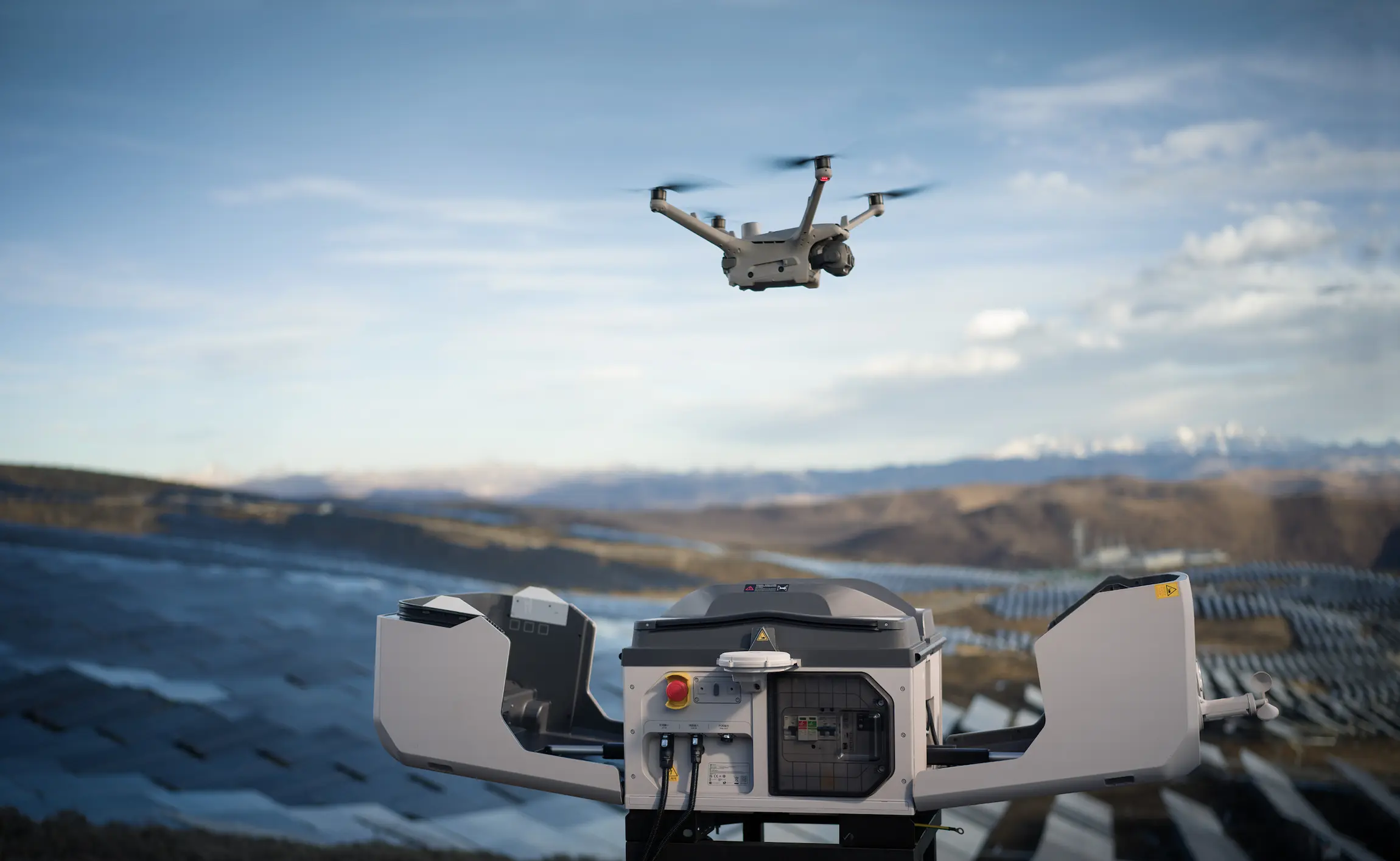
Drohne + Ladestation
Ihr Gelände verdient mehr als Standard-Sicherheit.
Möchten Sie die Sicherheit an Ihrem Standort mit einer Überwachungsdrohne, oder Drohnendetektion erhöhen und dabei Kosten einsparen?
Sie haben Fragen? Nutzen Sie unsere kostenlose Erstberatung!

.svg)


.png)








.webp)