

Protecting substations and high-voltage pylons: how do you prevent copper theft and sabotage?
Substations and high-voltage lines are extensive, often unmanned and hard to monitor. With an autonomous surveillance drone, thermal camera and AI you secure large energy facilities from the air, quickly, seamlessly and cost-effectively.


.png)



Why substations and high-voltage lines are particularly vulnerable.
Energy facilities stretch over wide areas, are often remote and rarely permanently staffed. Three structural weaknesses that can hardly be solved with a fence and a single camera.
Wide, unmanned areas
Substations and high-voltage pylons stretch over hectares and kilometers. A fence and a few individual cameras do not cover this extent and above all do not protect from above. Large gaps without visibility and without deterrence remain.
High damage from copper theft
The material value of copper and metal makes energy facilities a target. Often it is not the direct damage that is critical but the consequential damage: with power supply interrupted, production stops, and the supply failure causes high costs and possible liability.
KRITIS obligations for operators
Substations belong to the energy sector and thus to critical infrastructure. Operators must protect their facilities effectively and prove it. Sabotage and unauthorized entry are real scenarios whose risk must be documented and reduced.
Why classic protection reaches its limits at energy facilities.
Substations and high-voltage lines are a central part of the critical energy infrastructure. They are extensive, frequently unmanned and hard to monitor. That is exactly what makes them attractive for copper and metal theft, for sabotage and for unauthorized entry. Anyone who breaks in here risks not only property damage but an interruption of the power supply with consequential damage on a completely different scale.
Classic solutions such as a security fence and individual fixed cameras cover wide areas only poorly. A camera sees one section, a fence can be overcome, and from above the facility is practically unprotected. Along branching lines and large switchyards, gaps arise in which there is neither visibility nor deterrence. In addition: without AI, video cameras are good for recording but not for alarm-based analysis. Nobody watches all images permanently.
Classic guard staff do not solve the problem satisfactorily either. A single person manages only a few rounds on a large site, checkpoints are technically easy to trick, and in case of illness quality quickly drops. At remote energy facilities the travel factor is added: by the time the security service arrives, the copper has often long been carted away.
That is why at Security Airline we work with multi-layer security concepts. At the center is the Arrow-401 LR surveillance drone with thermal camera and AI. From the aerial perspective the field of view on the ground is very large, wide areas can be scanned in a short time, and the thermal camera detects people even at night and in poor visibility. The AI-based intrusion detection reliably reports intruders instead of merely recording.
Instead of expensive individual cameras we usually deploy battery-powered motion detectors. They are considerably cheaper and can be intelligently placed along the line and at the switchyard. When a sensor triggers, the surveillance drone flies fully automatically to the marked spot and illuminates the site. The concept is complemented by airspace security with the Security Dome, so that threats from the air are also detected early.
Alarm handling takes place with the customer's trained pilots or in a VdS-certified control center, even during a power outage, thanks to redundant communication and an uninterruptible power supply. This creates protection with strong deterrence and early detection that fits the KRITIS obligations and can have a positive effect on insurance and compliance.
Drawing up a multi-layer security concept remains important in order to systematically analyze the risks and weak points of your energy facility. Only from that does the efficient arrangement of drone, sensors and airspace security follow, tailored to substation, line and location.

How do you secure substation and line without tying up guard staff everywhere?
The core element of a multi-layer security concept is a robot. We use drones instead of ground-based security robots because they offer clear advantages for extensive energy facilities:
The aerial view covers everything
From the air, the field of view on the ground is very large. We also see people hiding along the line or in the bushes at the switchyard.
Thermal camera detects at night
The thermal camera captures people even in darkness and poor visibility. On the often unlit energy site this is decisive for the early detection of intruders.
AI scan of large areas
Very large areas can be scanned in a short time using AI. Irregular patrols along the line build up a high level of deterrence against copper theft and sabotage.
One concept, three components.
Our software, developed specifically for a high degree of automation, controls the surveillance drone largely automatically. Many flights and smart AI raise the chance of detecting offenders early, before they reach cables and equipment.
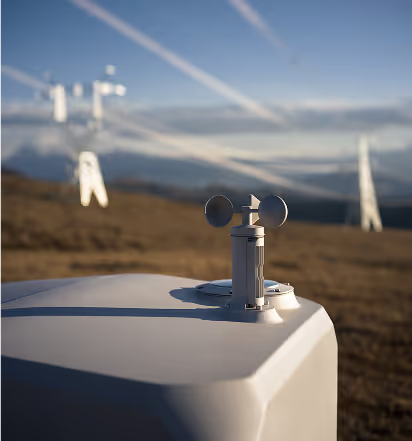
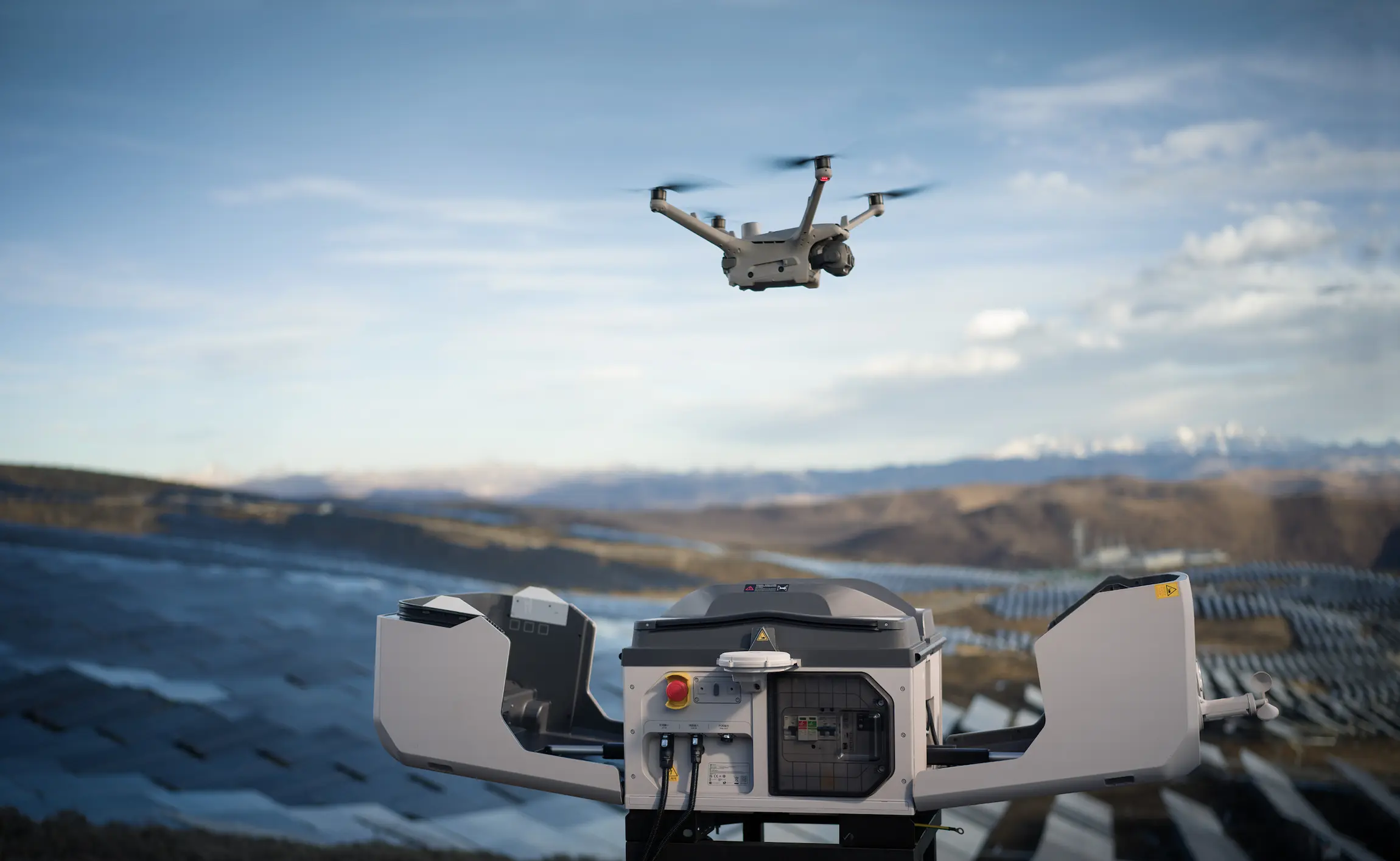
Arrow-401 LR drone and docking station
Purpose-built drone system with redundant communication electronics and a large UPS. You rely on the drone to replace other solutions dependably. Off-the-shelf drones lack this technology.
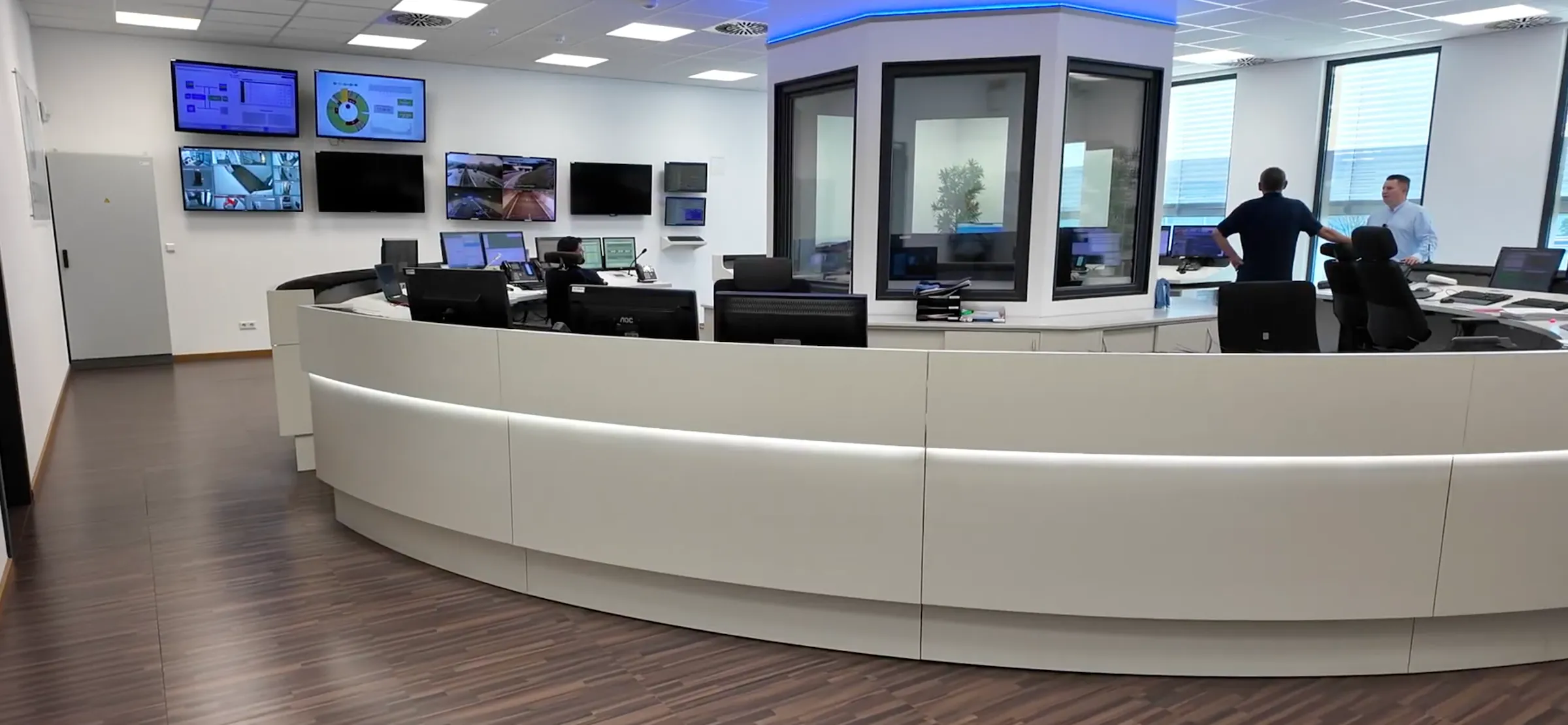
VdS-certified emergency and service control center
Alarms are handled by trained pilots on the customer side, such as the plant fire brigade, or in a VdS-certified control center. Essential for a high quality level and reliable processes, even during a power outage.
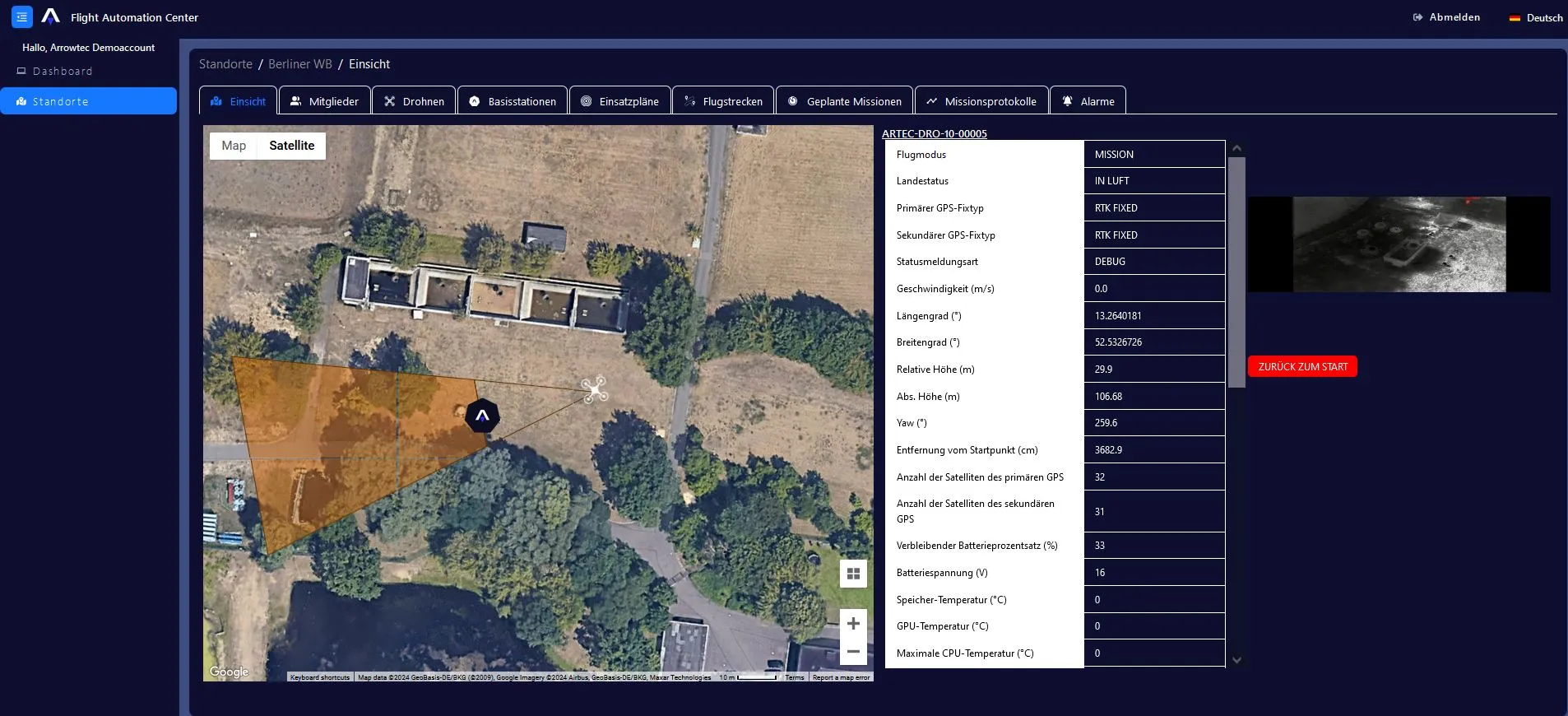
Flight Automation Center with AI
Our own secure flight automation software with intrusion AI. Controls the drone automatically, plans irregular patrols and integrates with existing sensors such as motion detectors.
Why simply buying a drone is not enough.
There are many providers that want to sell you expensive hardware and an expensive approval process. Then you have to hire several pilots. You want to operate your energy facility safely and not deal with the ten pieces of the puzzle needed to run an airline. That takes years of experience. Security Airline takes care of all the pieces of the puzzle for you.
150,000+ surveillance flights
Extensive experience in drone operations across all sites.
Initial consultation with security analysis
Free and without obligation, on site or remote.
Security concept (optional)
Multi-layer concept to raise the security level, including potential insurance savings.
Project planning & EU approval
Flight planning, alarm plan and approval across the entire EU, including Switzerland and Norway.
Redundant communication & UPS
So the drone reliably replaces other solutions, even during a power outage.
Installation of drone system & sensors
Integration with motion detectors, cameras and existing infrastructure.
Regular maintenance
We keep spare parts in stock and secure the availability of your drone surveillance permanently.
Proprietary software "Flight Automation Center"
Secure in-house development with intrusion AI for maximum detection quality.
How much do you save per year?
Calculate in 30 seconds what you save each year when you replace classic guarding of your energy facility with an autonomous surveillance drone.
Autonomous. Weatherproof.
Ready around the clock.
The Arrow-401 LR drone system launches on its own, when an alarm is triggered or at predefined patrol intervals. The system is fully operational at night, in wind or in sub-zero temperatures.
The rugged, VdS-certified drone is charged, protected and monitored in the integrated docking station. It handles climate control, telemetry and maintenance monitoring and thus ensures uninterrupted operation.
The result: less personnel effort, higher deployment frequency and significantly lower operating costs, especially for large, hard-to-see areas without permanent guard staffing.
Why our customers rely on drone monitoring
%201.avif)
Olaf Besser
Management
Heating network system technology from manufacturers YADOS. District heating stations and heating systems for efficient energy applications from Saxony.

Nowadays, it is increasingly important to work efficiently and cost-effectively. This also applies to entire facility management — this includes monitoring. The Security Airline system impressed us both in terms of price and technology.
Kathi Gerstner
(press spokesperson)
The LEAG Group not only provides electricity and heat. We offer companies, cities and municipalities a wide range of other products and services.
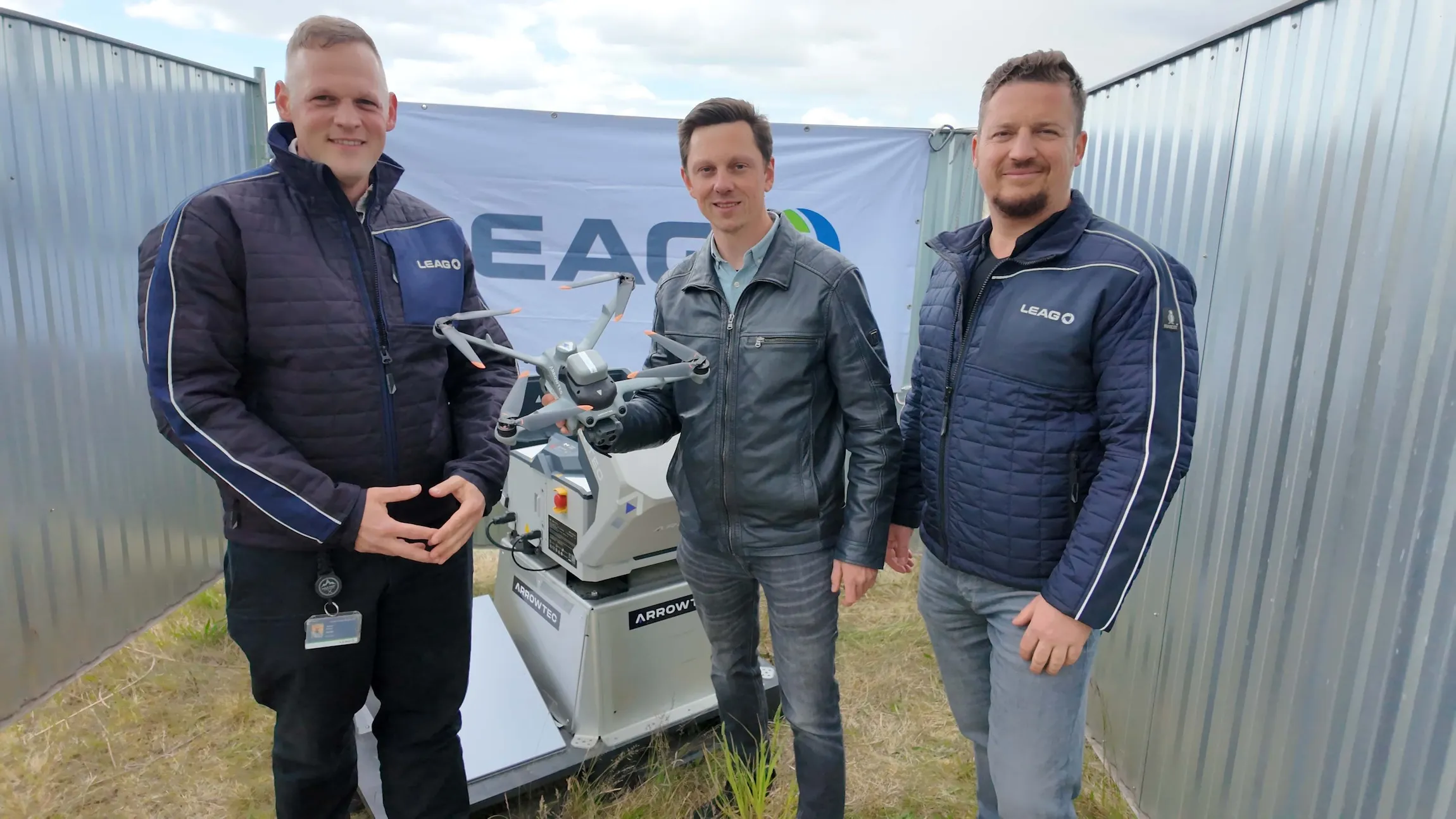
For several months now, the Lusatian energy supplier Leag has been using several Security Airline surveillance drones in combination with artificial intelligence to monitor its industrial plants more effectively and protect them from theft and unauthorised access.
Sebastian Hanne
Business Development Manager
We offer burglary protection, convenience and automation, fire protection and security, and video surveillance. Everything integrated in one system.
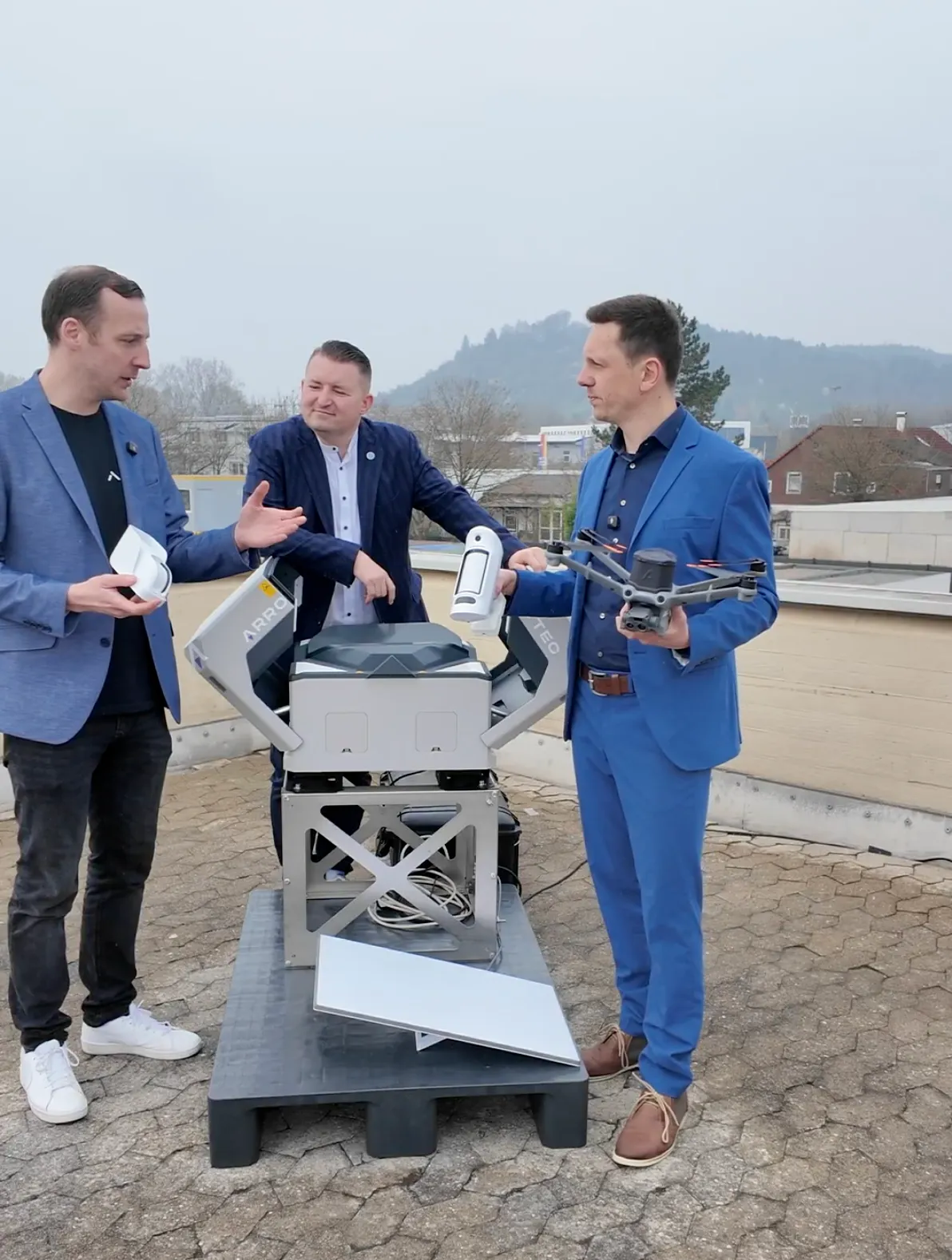
Our sensors harmonize perfectly with Security Airline's drone system. After an alarm has been triggered via the infrared motion detectors, the surveillance drone flies fully automatically to the marked location and illuminates the area.

.svg)
.svg)